


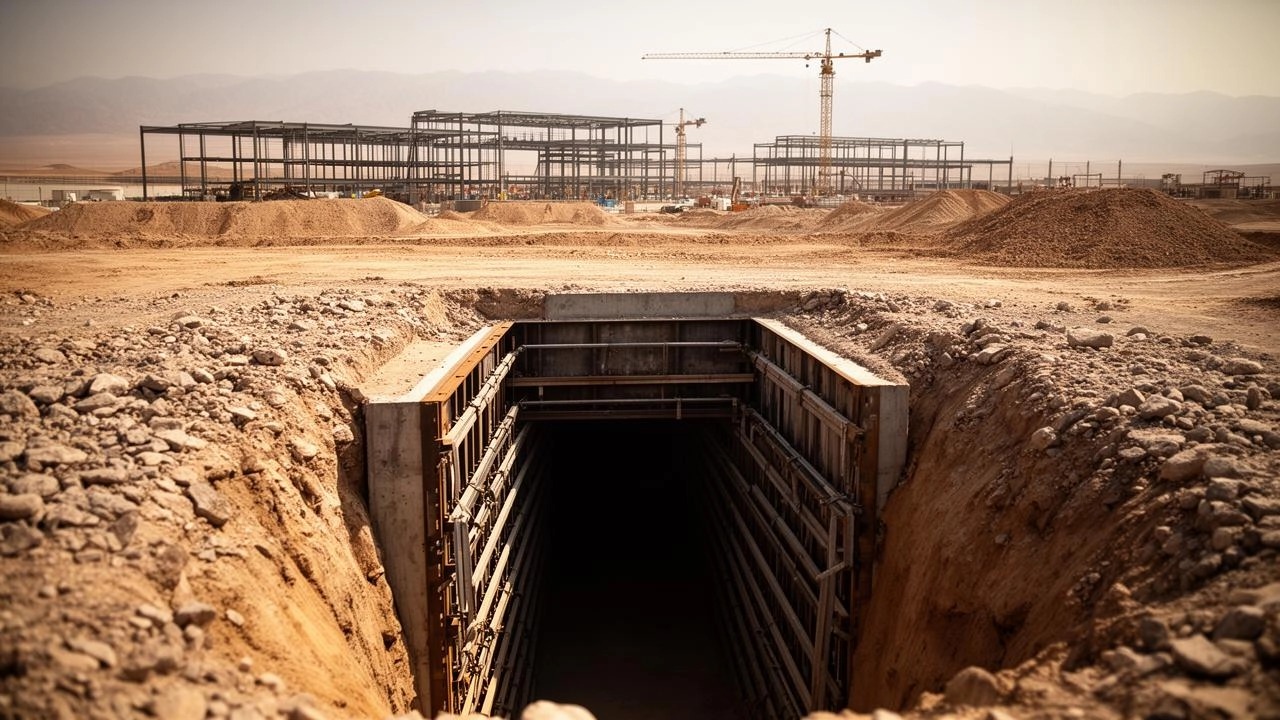
The United Arab Emirates is rethinking how it builds major infrastructure projects as security concerns increasingly influence long-term planning. Officials and industry leaders are now focusing on resilience and protection, leading to major changes in transportation, data center, and artificial intelligence infrastructure strategies.
For years, large-scale projects in the Gulf were designed primarily around efficiency, connectivity, and economic growth. However, recent regional tensions and the growing threat of missile and drone attacks have prompted a shift toward infrastructure that can better withstand potential security risks.
Analysts say the UAE is moving away from concentrating critical assets in a single location and is instead adopting a distributed model that spreads facilities across multiple sites. At the same time, authorities are exploring underground solutions for transportation networks and sensitive technology infrastructure.
BlackRock Chief Executive Larry Fink recently said that much of the Gulf region’s future infrastructure may need to move underground to reduce exposure to drone attacks. His comments reflect a broader discussion among investors and policymakers about how emerging security threats could reshape infrastructure planning across the Middle East.
One of the most visible examples of this shift involves The Boring Company, the tunnel construction firm founded by Elon Musk. The company recently secured $3 billion in new funding, according to reports, with support from UAE investors and related institutions.
The funding round reportedly valued the company at approximately $23 billion and included participation from several major international investment firms.
The new capital is expected to support plans for more than 150 kilometers of underground transportation tunnels in the UAE. The company has already partnered with Dubai’s Roads and Transport Authority on the Dubai Loop project, which aims to create underground transit routes designed for electric and future autonomous vehicles.
The project is intended to reduce traffic congestion in densely populated urban areas while also creating transportation infrastructure that is less vulnerable to external threats.
The UAE’s infrastructure strategy is also evolving in the technology sector. Authorities are reviewing plans for a large UAE-US artificial intelligence campus originally intended to be built at a single location in Abu Dhabi.
The project, which involves UAE technology company G42 and major American firms including Nvidia, OpenAI, and Oracle, was initially designed around a centralized 5-gigawatt data center complex.
Under revised plans now under consideration, future phases of the project could be distributed across multiple emirates rather than concentrated in one location.
The first phase, known as Stargate UAE, is expected to continue as planned. However, officials are reportedly evaluating whether later stages should be spread across different regions to improve resilience and reduce risk.
According to reports, discussions about redesigning the project intensified after Iranian missile and drone attacks targeted Gulf states hosting American military forces. Security concerns increased further after attacks reportedly damaged data center facilities in the region earlier this year.
Industry sources have said that protecting large technology campuses has become a growing priority as data centers increasingly support government services, artificial intelligence development, and critical digital infrastructure.
Security concerns were heightened when Iranian military media reportedly identified the planned location of the UAE’s AI campus and described it as a potential target. Reports indicate that the site is located near Al Dhafra Air Base, a facility that hosts American military personnel.
As a result, UAE officials are exploring several protective measures. These include deploying advanced air defense systems near major technology facilities, strengthening physical infrastructure, and potentially moving some operations underground.
Officials are also studying the possibility of locating highly sensitive computing facilities, including those handling military and intelligence-related information, in more secure geographic areas such as mountainous regions.
Experts estimate that additional security measures could increase construction costs for major data center projects. However, supporters argue that the added expense is justified given the strategic importance of digital infrastructure.
Investors have also begun viewing these changes as a significant business opportunity. Speaking earlier this year, Larry Fink said artificial intelligence investments in the Middle East could attract substantial capital as governments modernize infrastructure and strengthen security.
The UAE’s partnership with American technology firms remains a central part of its economic diversification strategy. The country is seeking to reduce its dependence on oil revenues while building a stronger position in artificial intelligence, advanced computing, and digital services.
As part of that effort, the UAE has expanded cooperation with American technology companies and increased investment in large-scale AI projects. Access to advanced technologies, including high-performance AI chips, has become a key component of those plans.
Although the final scope of the redesign remains unclear, the shift highlights how security considerations are increasingly influencing infrastructure decisions. For the UAE, the focus is no longer only on building larger and faster systems but also on ensuring that critical assets can continue operating under a wide range of potential threats.
The evolving strategy could shape the next generation of transportation and technology projects across the Gulf region, where resilience is becoming as important as efficiency in long-term planning.

