


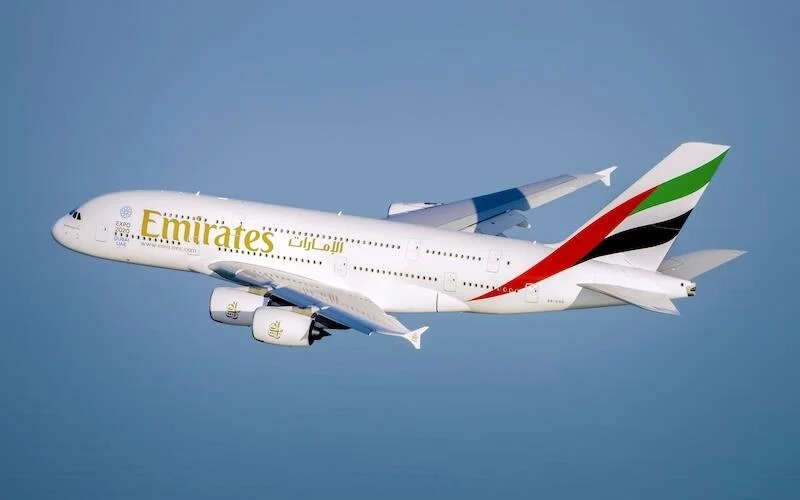
Germany is facing increasing pressure over a proposal that could grant additional traffic rights to airlines from the United Arab Emirates, as aviation groups warn that further market access may deepen competitive challenges for European carriers.
The debate comes ahead of UAE President Sheikh Mohamed bin Zayed Al Nahyan’s state visit to Germany, where he is scheduled to meet German President Frank-Walter Steinmeier and Chancellor Friedrich Merz. Discussions are expected to focus on economic cooperation, development partnerships, and key regional and international issues.
At the center of the dispute is a call from the European Cockpit Association, which represents more than 44,000 pilots across Europe. The organization has urged German authorities to reject any expansion of traffic rights for UAE airlines unless stronger measures are introduced to ensure what it describes as fair competition.
Pilot representatives argue that granting additional access would allow Gulf carriers to attract more long-haul passengers through hubs in Dubai and Abu Dhabi. According to the group, this could reduce traffic flowing through major European airports and place further pressure on airlines based within the European Union.
The association believes aviation policy should consider a wider range of factors beyond connectivity and passenger choice. These include employment, social standards, environmental regulations, and the long-term strength of the European aviation sector.
One of the key concerns raised by the group involves access to Russian airspace. European Union airlines remain unable to use Russian airspace on many routes to Asia, forcing them to operate longer and often more expensive flights. In contrast, several Gulf carriers continue to use those routes, giving them shorter travel times and lower operating costs on certain services.
Industry representatives say this creates an uneven competitive environment that policymakers should address before expanding market access agreements.
The concerns mirror arguments previously raised by Lufthansa Group, Germany’s largest airline company. Lufthansa has repeatedly opposed efforts to increase access for UAE carriers, arguing that additional rights could weaken Germany’s aviation industry at a time when policymakers are seeking to strengthen the sector.
Under the current aviation agreement between Germany and the UAE, Emirates serves four German cities: Frankfurt, Munich, Hamburg, and Dusseldorf. The airline has expressed interest in launching services to Berlin and Stuttgart, but existing rules would require it to replace one of its current destinations rather than add a new route.
Lufthansa argues that expanding Emirates’ access would not significantly increase direct links between Germany and destinations beyond the UAE. Instead, the company says a large share of passengers would simply connect through Dubai, allowing the Gulf carrier to capture traffic that might otherwise pass through European hubs.
The discussion is taking place during a period of reduced air travel capacity between Germany and the UAE. Aviation data for September 2026 shows a decline in scheduled seat capacity compared with the same month a year earlier.
The reduction has been linked largely to instability in the Middle East and operational changes by several airlines. Currently, all scheduled passenger capacity between the two countries is being provided by UAE-based airlines.
Emirates remains the dominant carrier in the market, accounting for the majority of available seats. Etihad Airways holds the second-largest share, while Air Arabia operates a smaller number of services between the UAE and Germany.
German carriers have reduced their presence on these routes. Lufthansa and Condor both suspended services to the UAE amid ongoing regional uncertainty, leaving Gulf airlines with a larger share of the market.
Despite disagreements over aviation policy, economic ties between Germany and the UAE remain strong. Trade between the two countries has continued to grow, supported by investment, energy cooperation, technology partnerships, and business activity.
Thousands of German companies operate in the UAE, often using the country as a gateway to markets across the Middle East, Africa, and Asia. This close commercial relationship is expected to feature prominently during the upcoming meetings between leaders of both nations.
As discussions continue, German policymakers face the challenge of balancing economic cooperation with concerns raised by airlines, pilot groups, and industry stakeholders. The outcome could shape the future of aviation links between Europe and the Gulf while influencing broader debates about competition and market access in international air travel.

