


The United Arab Emirates joined seven other countries in issuing a strong condemnation of statements supporting the displacement of Palestinians from the Gaza Strip, reaffirming opposition to any proposals that would alter the demographic makeup of the occupied Palestinian territories.
The joint statement was issued by the foreign ministers of the UAE, Saudi Arabia, Egypt, Qatar, Jordan, Pakistan, Turkey, and Indonesia. The countries expressed firm rejection of any attempts or plans aimed at relocating Palestinians either within or outside their homeland.
The ministers warned that proposals involving the forced movement of Palestinians could have serious consequences for regional stability and international peace efforts. They stressed that such actions would undermine the rights of the Palestinian people and create additional challenges for achieving a lasting political solution.
According to the statement, any effort to displace Palestinians would violate established principles of international law and international humanitarian law. The ministers said the rights of Palestinians must be protected and respected under all circumstances.
The eight countries emphasized that the Gaza Strip remains an integral part of the occupied Palestinian territory. They also reaffirmed support for preserving the unity of Palestinian territories, including the occupied West Bank and East Jerusalem.
The ministers reiterated that a two-state solution remains the only viable path toward a just and lasting peace. They called for the establishment of an independent Palestinian state with East Jerusalem as its capital, in line with long-standing international positions on the conflict.
In addition, the countries urged the international community, particularly the United Nations Security Council, to take action against attempts to impose new demographic or geographic realities on Palestinian territories. They argued that preserving existing legal and political frameworks is essential for future peace negotiations.
The joint response followed recent remarks by senior Israeli officials regarding the future of Gaza’s population. The comments generated widespread reactions across the Middle East and beyond, with several governments expressing concern about proposals involving population transfers.
Regional governments have consistently opposed any plans that could result in the relocation of Palestinians from Gaza. Arab states have repeatedly maintained that solutions to the conflict should focus on political negotiations and respect for international law rather than demographic changes.
The issue has remained highly sensitive because of its historical significance. Many Palestinians view discussions about relocation through the lens of past displacement events that remain deeply rooted in collective memory and national identity.
Meanwhile, international debate has continued over the future governance and reconstruction of Gaza. Diplomatic efforts remain focused on achieving stability in the territory while addressing humanitarian needs and supporting long-term peace initiatives.
The UAE has continued to play an active humanitarian role throughout the crisis. In recent days, Emirati aid operations delivered additional assistance to Gaza, including hundreds of tonnes of relief supplies intended to support civilians affected by the conflict.
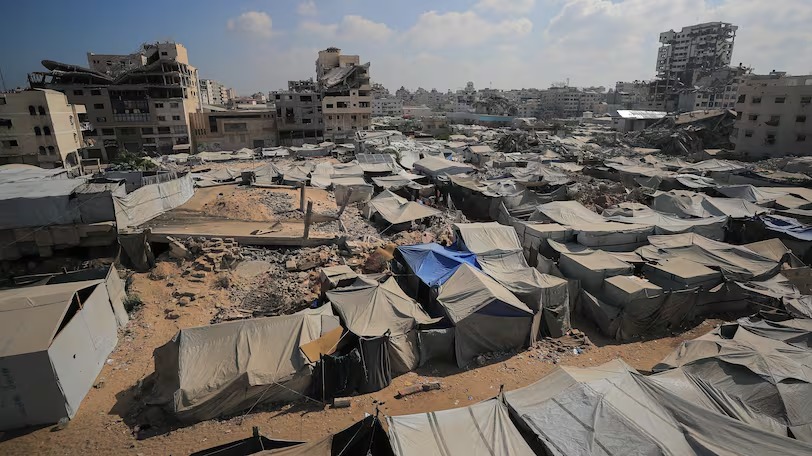
Humanitarian organizations have repeatedly highlighted the difficult conditions facing residents in the territory. Many communities continue to require food, medical assistance, shelter materials, and other essential services as recovery efforts proceed.
The conflict that began in October 2023 has caused widespread destruction and displacement across Gaza. The war has had a significant human cost and continues to influence diplomatic discussions throughout the region.
International efforts to secure a lasting resolution remain ongoing. Governments and global organizations continue to call for dialogue, humanitarian support, and measures aimed at preventing further escalation.
The joint statement from the eight countries reflects a unified regional position on one of the most sensitive issues connected to the conflict. By rejecting proposals involving the displacement of Palestinians, the ministers sought to reinforce support for internationally recognized principles and existing frameworks for peace.
Observers say the coordinated response demonstrates growing diplomatic cooperation among regional powers on matters related to the Palestinian issue. The statement also highlights continued support for a negotiated settlement that preserves Palestinian rights and territorial integrity.
As discussions about Gaza’s future continue, the eight countries have made clear that any lasting solution must respect international law, protect civilian populations, and support the goal of a comprehensive and sustainable peace in the region.

