


Eritrea has accused the United Arab Emirates of expanding its influence across Africa through a network of ports and strategic facilities, raising fresh questions about growing competition for power in the Horn of Africa and the Red Sea region.
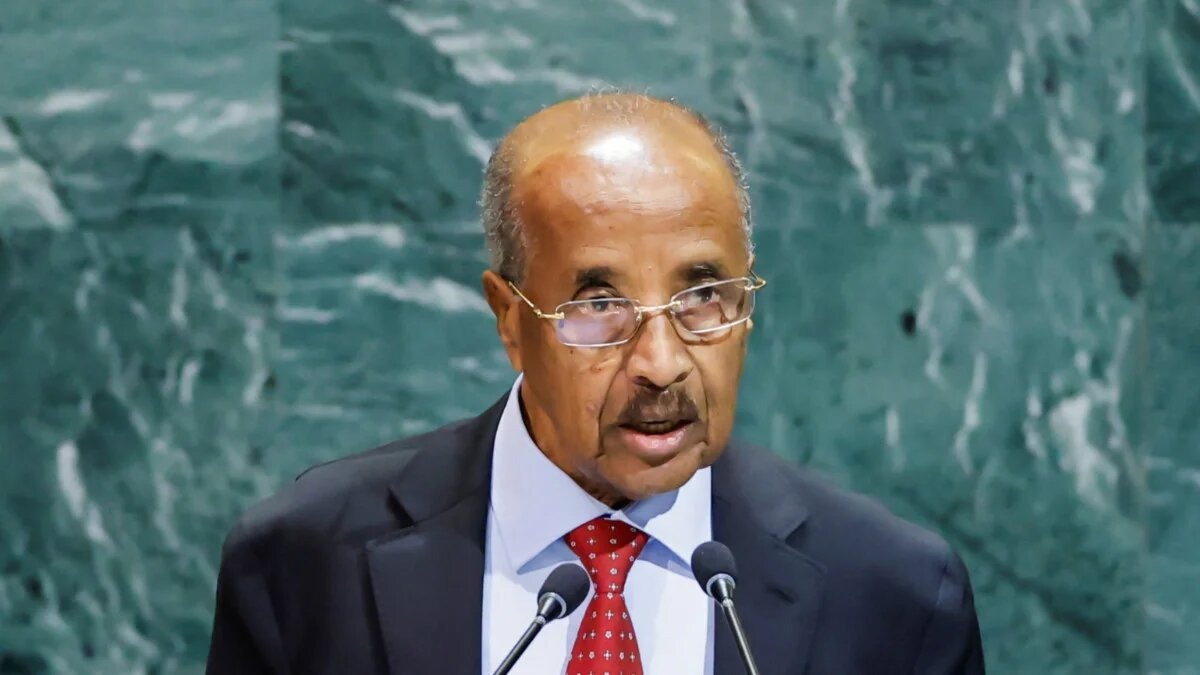
In an interview from the Eritrean capital of Asmara, Foreign Minister Osman Saleh said the UAE’s growing presence at ports across Africa extends beyond economic interests and reflects broader geopolitical ambitions.
Saleh described the strategy as an effort to build influence throughout the region and questioned why Emirati companies have secured major positions at key ports stretching across East Africa and the Red Sea.
“The UAE has port facilities everywhere in the region,” Saleh said. “African countries have to ask why.”
The comments highlight increasing tensions between Eritrea and the UAE, two countries whose relationship has shifted significantly over the past decade.
The UAE has become one of the most active foreign investors in African port infrastructure. Emirati companies, including DP World and AD Ports Group, have invested in or manage facilities in several countries, including Egypt, Tanzania, Somaliland, and Puntland.
Supporters of these investments argue they help modernize infrastructure, improve trade links, and create economic opportunities. However, critics have expressed concerns that the projects may also advance strategic and military objectives.
Some governments have resisted Emirati involvement. Djibouti canceled a major DP World concession in 2018 after a prolonged dispute. Sudan later ended a proposed agreement that would have allowed AD Ports Group to develop a large port project on the Red Sea coast.
The disagreement between Eritrea and the UAE reflects wider regional concerns over foreign influence and military competition along one of the world’s most important maritime corridors.
Relations between Asmara and Abu Dhabi were once relatively strong. The UAE established a military facility at Eritrea’s southern port of Assab in 2016 and used the base to support operations against Houthi forces in Yemen.
However, ties gradually weakened in the years that followed.
Eritrean officials said their government rejected proposals that would have expanded the UAE’s military presence in the country. According to senior officials, Eritrea opposed plans for a foreign military facility on islands within the Dahlak Archipelago.
Saleh said Eritrea has consistently opposed allowing foreign powers to establish long-term strategic hubs inside the country.
“We do not want any foreign power to have a hub in Eritrea,” he said.
The dispute comes as Eritrea and the UAE find themselves supporting opposing sides in several regional conflicts.
One major point of disagreement is Sudan. The UAE has been widely linked to support for the Rapid Support Forces, while Eritrea has strengthened ties with Sudanese military leader Abdel Fattah al-Burhan.
Regional rivalries have also intensified around Ethiopia.
Eritrea and Ethiopia cooperated during the conflict against the Tigray People’s Liberation Front between 2020 and 2022. However, relations between the neighboring countries have since deteriorated again.
Eritrean officials have expressed concern over Ethiopia’s growing partnership with the UAE. Ethiopian Prime Minister Abiy Ahmed has developed close ties with Abu Dhabi, and Ethiopia has received Emirati military support and equipment in recent years.
According to Eritrean officials, the relationship extends beyond the UAE and increasingly involves Israel as well.
Saleh argued that the UAE and Israel appear to be aligning their interests in parts of the Horn of Africa, particularly in Somaliland. Officials in Somaliland have publicly expressed interest in deeper cooperation with Israel, including possible security arrangements.
Eritrean leaders view those developments with caution.
Saleh questioned why outside powers are seeking greater influence in the Horn of Africa and warned that increased military involvement by foreign countries could create new tensions in an already fragile region.
Although Eritrea and Israel established diplomatic ties after Eritrean independence in 1993, relations have cooled in recent years.
Eritrean officials say they no longer see a need for close diplomatic engagement and have reduced official contacts. While Asmara has not adopted a hostile position toward Israel, leaders have signaled discomfort with what they see as expanding foreign influence across the Horn of Africa.
The remarks from Eritrea’s foreign minister underscore the growing geopolitical competition shaping the Red Sea and East African region. As global and regional powers seek influence through ports, trade routes, and security partnerships, countries across the Horn of Africa are increasingly weighing the economic benefits of foreign investment against concerns about sovereignty and strategic control.

