


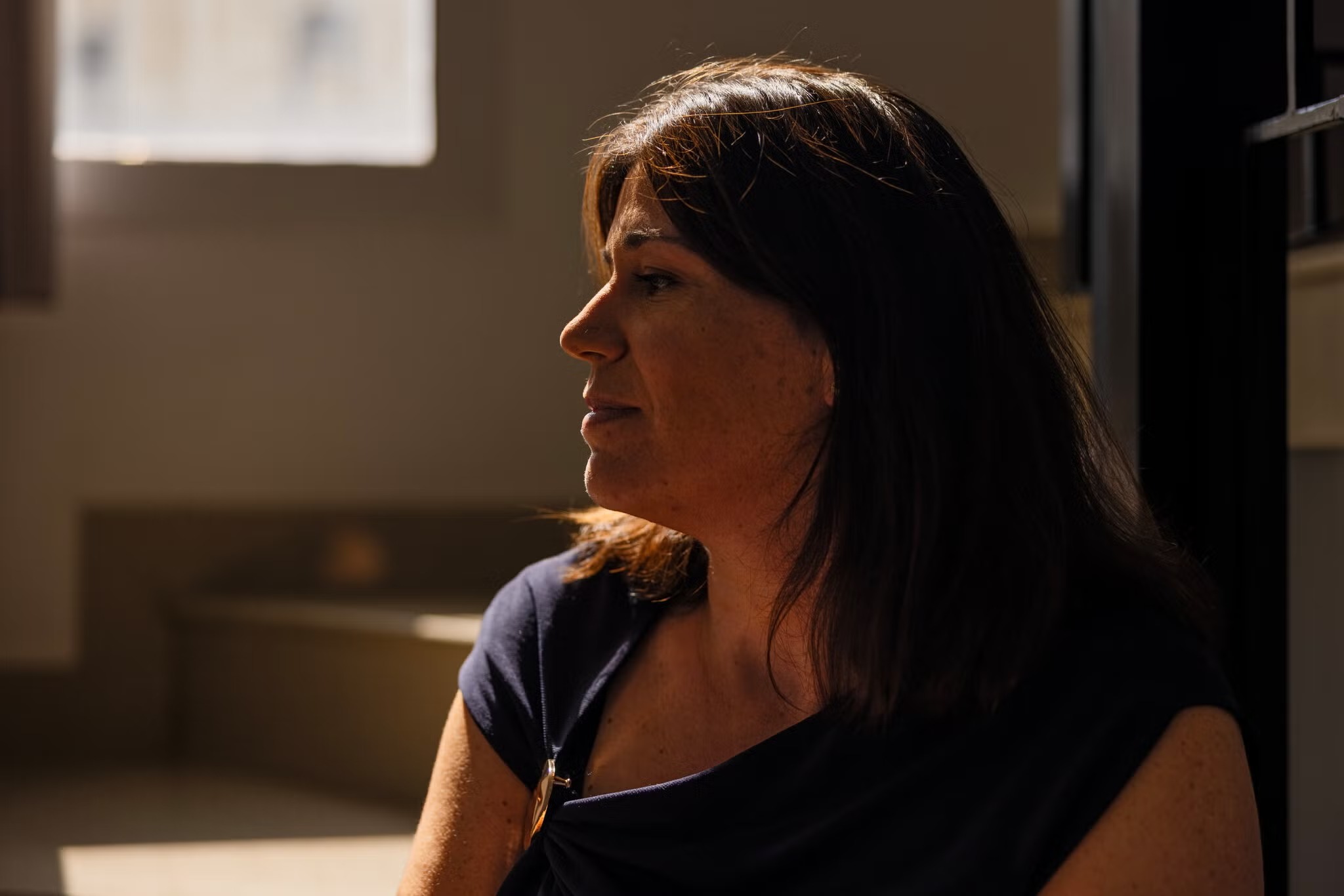
When Tamar Smulowicz moved from Israel to the United Arab Emirates six years ago, she did not expect the Gulf nation to become home. The move followed the normalization of relations between Israel and the UAE and opened a new chapter for her family.
Her husband had secured an information technology job with the government in Ras Al Khaimah, a port city in the northern Emirates. The family arrived during the summer, and their two daughters, then almost 5 and 8, soon spent much of their time at the swimming pool.
The girls later joined a school with an English-language curriculum. Smulowicz also built friendships with mothers from different religions, nationalities and backgrounds. Many were people she would rarely have met in Israel.
“It was a once in a lifetime option,” she said in an interview this month. She added that the family felt welcome and safe soon after arriving.
But regional conflict and security concerns have changed the experience for some Israelis and Jewish residents in the wealthy Gulf country. A community that once felt increasingly open has become quieter and less visible.
Religious symbols have disappeared from public view in some places, while gatherings have shifted into private settings. Some residents are more careful about their online activity and less willing to speak publicly to the media.
Others are reconsidering how openly they identify as Israeli or Jewish. For some, the question is whether they can continue building a life in a country they once saw as a safe and welcoming home.
The change began after the Hamas-led attack on Israel on October 7, 2023, which killed more than 1,200 people. Israel’s subsequent war in Gaza killed tens of thousands of Palestinians and led to accusations of genocide against Israel.
As Israel expanded its military operations across the region, international criticism grew. Israelis and Jewish communities in different countries also faced a more difficult public environment amid rising tensions.
The UAE’s own security concerns added to the uncertainty. In 2024, an Israeli rabbi was kidnapped and killed in the country. Three Uzbek nationals were initially arrested in connection with the case.
Three people were later sentenced to death, while a fourth received a prison sentence. Authorities did not disclose the identities of those sentenced.
The killing raised concerns among Israelis and Jews living in the Emirates. It also highlighted the security risks that can affect a small community whose members may be more exposed during periods of political tension.
Regional conflict intensified further in the following years. An Israeli attack on Iran in 2025, joined by the United States, was followed by renewed US-Israeli warfare in 2026.
The conflict then reached the UAE directly. Iran launched waves of missiles and drones toward the country this year. Some strikes hit sites in the Emirates, while falling debris from intercepted weapons also affected locations on the ground.
These events have challenged the sense of security that helped attract some Israelis to the UAE after the two countries established formal relations. The Emirates had offered opportunities for work, education and social connections in a diverse international setting.
For families such as the Smulowicz family, the move had once represented a chance to build a life beyond the divisions and tensions they knew elsewhere. Their early experiences included friendships across national and religious lines and a feeling of being welcomed.
Now, the wider regional climate has made daily life more complicated for parts of the Jewish community. Some residents have chosen greater privacy, while others are weighing their future in the country.
The changes do not mean that every Israeli or Jewish resident has the same experience. Individual decisions depend on personal circumstances, family needs and how each person assesses the risks.
Still, the community’s reduced public visibility points to a shift in how some people approach life in the Emirates. Activities that once felt comfortable may now be handled more discreetly, particularly when they involve religious identity or public statements about regional events.
The UAE remains a place where international residents have built careers and families. But the conflicts surrounding Israel, Iran and Gaza have added new pressures for Israelis and Jews who had hoped to make the Gulf nation their long-term home.
For those who once viewed the Emirates as a refuge from familiar tensions, the central question has become whether that sense of safety can endure as regional conflict continues.

