


The United Arab Emirates is preparing to expand professional training opportunities as the Higher Colleges of Technology (HCT) plans to increase the number of its specialised academies from four to 10. The move follows a record year for student graduations and reflects the country’s growing focus on workforce skills and lifelong learning.
Khalid Alhammadi, chief executive of In^X Education, confirmed the expansion plans in an interview with The National. He said the organisation aims to reach 10 academies in less than a year. It currently operates four centres focused on national initiatives, language and communication, artificial intelligence and emerging technology, and assessment.
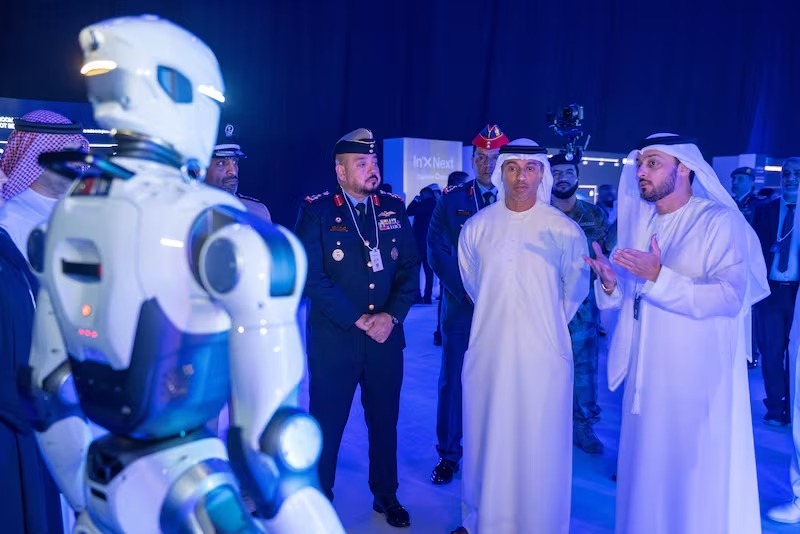
The expansion follows the launch of In^X Next 2026. The event marked 30 years of HCT’s Centre of Excellence for Applied Research and Training, known as Cert. The centre has now been rebranded as In^X Education as it prepares to widen its role in professional development.
The academies are designed to provide specialised programmes that meet the needs of employers and organisations. Their courses aim to equip workers with practical skills that match business goals and changing demands across different industries.
Cert has trained more than 105,000 Emiratis since it was established. In^X Education now wants to build on that record and extend its training services across the wider region.
Alhammadi said the organisation aims to become a major provider of education, learning, and professional development in the UAE and neighbouring countries. He also highlighted the country’s ambition to share its knowledge and training expertise beyond its borders.
The planned growth comes as HCT celebrates its largest graduating class to date. More than 6,700 students attended the graduation ceremony at Etihad Arena in Abu Dhabi this week. The group was 43 per cent larger than the previous year’s graduating class.
The record number of graduates reflects the growing contribution of Emirati talent to the national workforce. It also supports the UAE’s wider efforts to develop skilled professionals who can meet the needs of a changing economy.
Eighteen outstanding graduates received cars in recognition of their academic performance. Fourteen of them achieved a perfect cumulative grade point average of 4.0, while three recorded a GPA of 3.99.
One of the top graduates was Haamed Marwan Al Ajmani. He completed a bachelor’s degree in computer information science, with a specialisation in security and forensics, at HCT’s Dubai campus. He graduated with a perfect 4.0 GPA.
Al Ajmani said balancing his studies with work, volunteering, and national service was his biggest challenge. He explained that managing these responsibilities taught him discipline and time management. It also helped him maintain strong academic results while continuing to meet other commitments.
The graduation ceremony also highlighted the role of education in supporting the UAE’s long-term economic plans. Dr Ahmad Belhoul Al Falasi, Minister of Sports, HCT chancellor, and chairman of its investment arm Capital H, addressed the graduates.
He said developing young talent was central to the country’s goals for economic diversification and competitiveness. He also stressed that completing a university degree should not be seen as the end of education.
Instead, he described graduation as the beginning of a longer learning journey. Workers must continue to develop their skills as technology changes and employers face new demands.
Artificial intelligence was a key part of his message. Al Falasi said employees and leaders need to understand AI if organisations are to use it effectively. He also referred to his own training at Cert, saying it had helped him better understand the technology and its possible uses.
He warned that introducing powerful digital tools is not enough. People across an organisation must know how to use them and understand their potential. This makes workforce training an important part of successful AI adoption.
In^X Education plans to place these needs at the centre of its future programmes. Its focus will include improving Emiratis’ employment prospects through courses linked to priority sectors and real workforce requirements.
Alhammadi said skills-based education, lifelong learning, and AI readiness would play an increasingly important role in changing the workforce.
The planned expansion of the academies reflects a wider shift in the UAE’s education strategy. Rather than focusing only on traditional degrees, the country is placing greater emphasis on practical training and skills that can be updated throughout a person’s career.
With more than 6,700 students graduating and 10 professional academies planned, HCT aims to strengthen the link between education and employment. The initiative could also help the UAE share its training experience with other countries as demand for skilled workers continues to grow.

