


Abu Dhabi and Qatar continue to show strong financial strength as both maintain high-grade ratings. The latest updates highlight Gulf Credit Ratings Stability, even as the region faces rising geopolitical risks.
Ratings agency Fitch Ratings confirmed Abu Dhabi’s long-term foreign-currency issuer rating at AA. This is one of the highest levels on its scale. It reflects strong fiscal health and solid external balances.
An AA rating means the emirate can easily access global markets. It can raise funds when needed and maintain investor trust. This level of confidence is key during uncertain times.
Fitch pointed to Abu Dhabi’s strong oil revenue as a major support factor. Despite tensions linked to the Iran crisis, export income has stayed steady. This has helped offset the negative effects of the conflict.
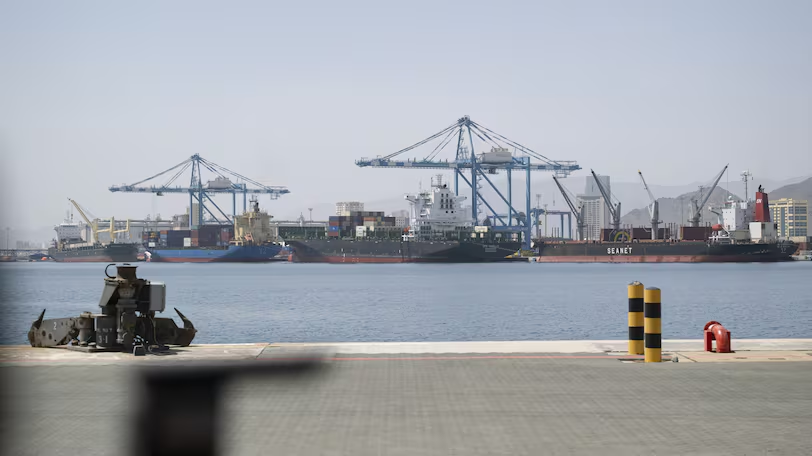
Exports through the Port of Fujairah have also played a key role. The port allows shipments to continue even when the Strait of Hormuz faces disruption. This reduces risk for the country’s energy trade.
Analysts believe Abu Dhabi’s oil export system is less exposed to long-term damage. Its focus on crude exports makes it more flexible than complex gas or downstream plants.
However, risks still exist. Any escalation in the US-Iran conflict could impact exports and energy facilities. A prolonged closure of key shipping routes may also affect the emirate’s financial outlook.
Fitch expects Abu Dhabi’s economy to shrink by about 1 percent in 2026. Both oil and non-oil sectors may see a slowdown. Still, non-oil activity is expected to recover quickly after the crisis.
The banking sector in Abu Dhabi remains strong. This adds another layer of support to overall economic stability. It also helps maintain investor confidence during uncertain times.
Meanwhile, Qatar has also maintained its high-grade rating. S&P Global Ratings kept the country’s long and short-term ratings at AA. This reflects strong financial reserves and external assets.
Qatar’s economy faced direct impact during the conflict. Energy facilities linked to QatarEnergy were hit during attacks. The company even declared force majeure at the peak of the crisis.
Despite this, Qatar holds large financial reserves. These assets help the country manage supply disruptions and economic shocks. Around 90 percent of its exports pass through the Strait of Hormuz, making stability in the region very important.
S&P expects Qatar’s economy to shrink by about 5 percent in 2026. The slowdown is linked to reduced gas production and wider effects on trade, manufacturing, and tourism.
However, the outlook improves after this period. Growth is expected to return strongly from 2027. Increased gas production is likely to support this recovery. Experts predict average GDP growth of around 4.8 percent between 2027 and 2029.
The broader region is also feeling the impact of the conflict. The World Bank expects Middle East growth to slow to 1.8 percent this year. Ongoing tensions could leave long-term economic effects.
Growth forecasts for the United Arab Emirates have been revised down. The economy is now expected to grow by 2.4 percent instead of earlier estimates above 5 percent.
Qatar’s growth outlook has also been adjusted. Forecasts suggest a contraction between 5.7 percent and 6.4 percent in the current year.
Despite these challenges, Gulf Credit Ratings Stability remains intact. Strong financial buffers, large reserves, and flexible export systems help both Abu Dhabi and Qatar manage risks.
The current situation shows how prepared these economies are. Even under pressure, they continue to maintain strong credit profiles. This stability supports long-term confidence and future growth.
As the geopolitical situation evolves, both countries are closely monitoring risks. Their ability to adapt and respond will remain key in protecting their economic strength.

