


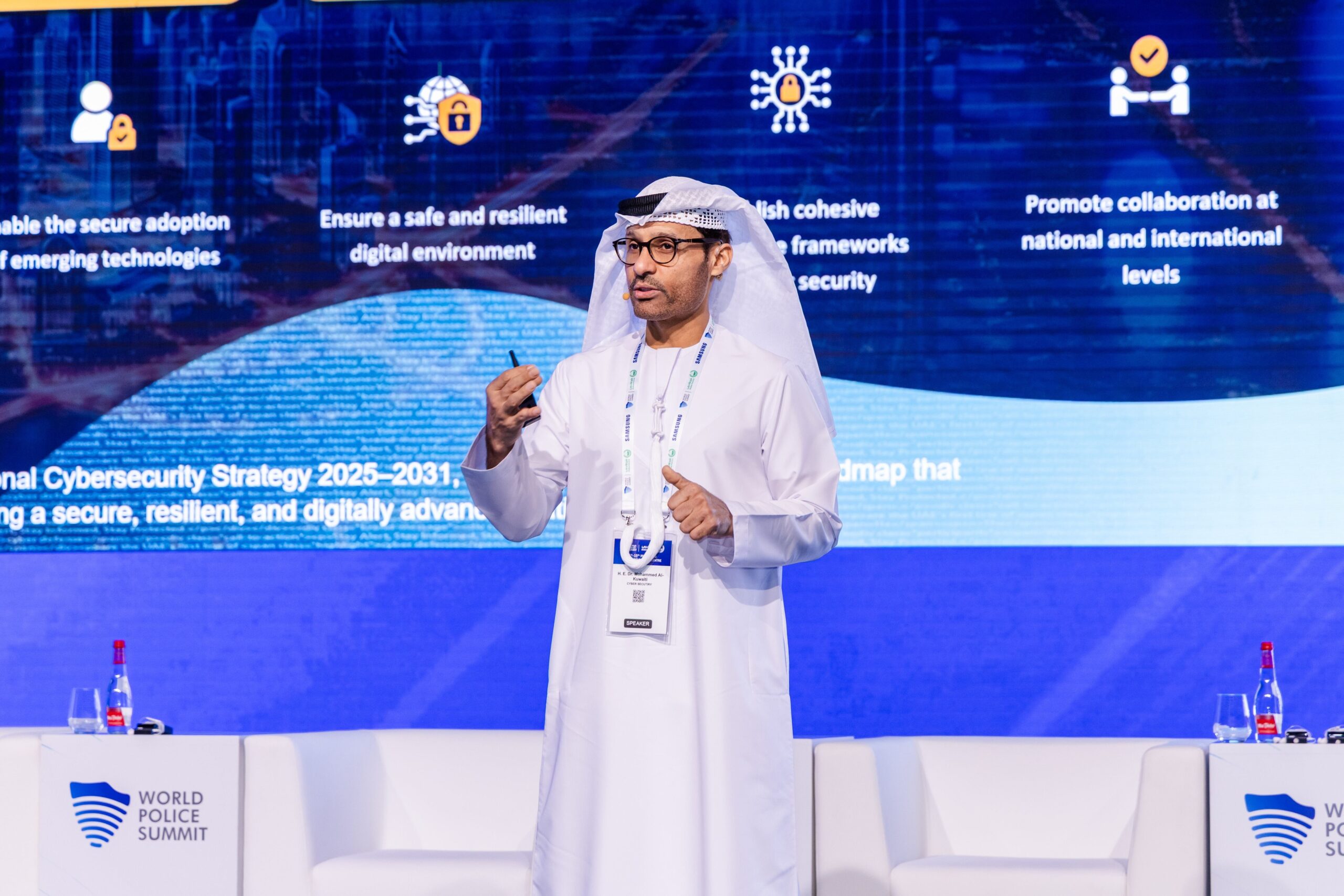
The United Arab Emirates continues to face a significant volume of cyber attacks despite improvements in its digital defenses, according to the country’s top cyber security official.
Dr Mohamed Al Kuwaiti, head of cyber security for the UAE, said the country recorded approximately 640,000 cyber attacks in a single day this week. He stated that many of the threats have been linked to Iran’s Islamic Revolutionary Guard Corps, which he identified as a major source of malicious cyber activity targeting the Emirates.
Speaking about the current threat environment, Dr Al Kuwaiti said the UAE remains under constant pressure from online attacks even though the intensity has eased compared with the early stages of the regional conflict. He noted that cyber threats continue to evolve and remain a serious concern for national security.
According to Dr Al Kuwaiti, digital evidence and attack patterns have helped authorities identify the origins of many cyber operations. He said the UAE has observed strong indicators connecting numerous attacks to Iranian-linked actors, including elements associated with the Islamic Revolutionary Guard Corps.
The comments come as the country maintains heightened vigilance against both physical and digital threats. During periods of increased regional tension, the UAE was required to defend against missile and drone attacks while also strengthening protections against cyber intrusions.
Officials say cyber security has become an increasingly important component of national defense as governments, businesses and critical infrastructure systems become more dependent on digital technologies.
Artificial intelligence has emerged as a key factor in this changing environment. Dr Al Kuwaiti warned that advances in AI are enabling cyber criminals and hostile actors to launch more sophisticated and effective attacks.
He explained that artificial intelligence allows attackers to automate processes, improve targeting methods and increase the speed of operations. As a result, cyber threats can develop and spread more rapidly than in previous years.
At the same time, the UAE is using artificial intelligence as a central part of its defense strategy. Dr Al Kuwaiti said advanced technologies are helping authorities detect threats, strengthen protective measures and disrupt malicious activities before they cause significant damage.
The use of AI-driven security tools has become a major focus of the country’s cyber defense efforts. Officials believe these technologies can improve threat detection and provide faster responses to emerging risks.
Recent incidents highlight the ongoing challenge. In August, the UAE Cyber Security Council reported that national cyber teams successfully identified and contained coordinated attacks targeting the aviation, energy and education sectors. Authorities said the operations were stopped before they could disrupt critical systems.
The attacks followed earlier incidents that affected financial institutions during July. These events underscored the need for continued investment in cyber security capabilities as attackers increasingly target essential services and economic sectors.
To strengthen long-term resilience, the UAE has launched several new initiatives focused on digital security. One of the most significant developments was the creation of the UAE Cyber Factory, which was introduced in May.
The programme was established by the UAE Cyber Security Council in partnership with CPX Holding. Its mission is to develop next-generation cyber security solutions through advanced technologies, specialized training and artificial intelligence-powered systems.
Officials say the initiative is designed to support innovation while helping the country prepare for future cyber challenges. The project aims to enhance national capabilities in threat detection, defense operations and cyber resilience.
Cyber security has become a growing priority worldwide as governments face increasing risks from digital attacks targeting infrastructure, businesses and public services. The rapid growth of artificial intelligence has further intensified concerns about how cyber threats may evolve in the years ahead.
The UAE has responded by expanding investments in technology, workforce development and security systems. Authorities argue that maintaining strong cyber defenses is essential for protecting national interests and supporting economic growth in an increasingly digital world.
As cyber threats continue to emerge from multiple sources, UAE Cyber Security Threats remain a key focus for policymakers and security agencies. Officials say ongoing investment in technology, international cooperation and AI-driven defense tools will be critical to safeguarding the country against future attacks.

