


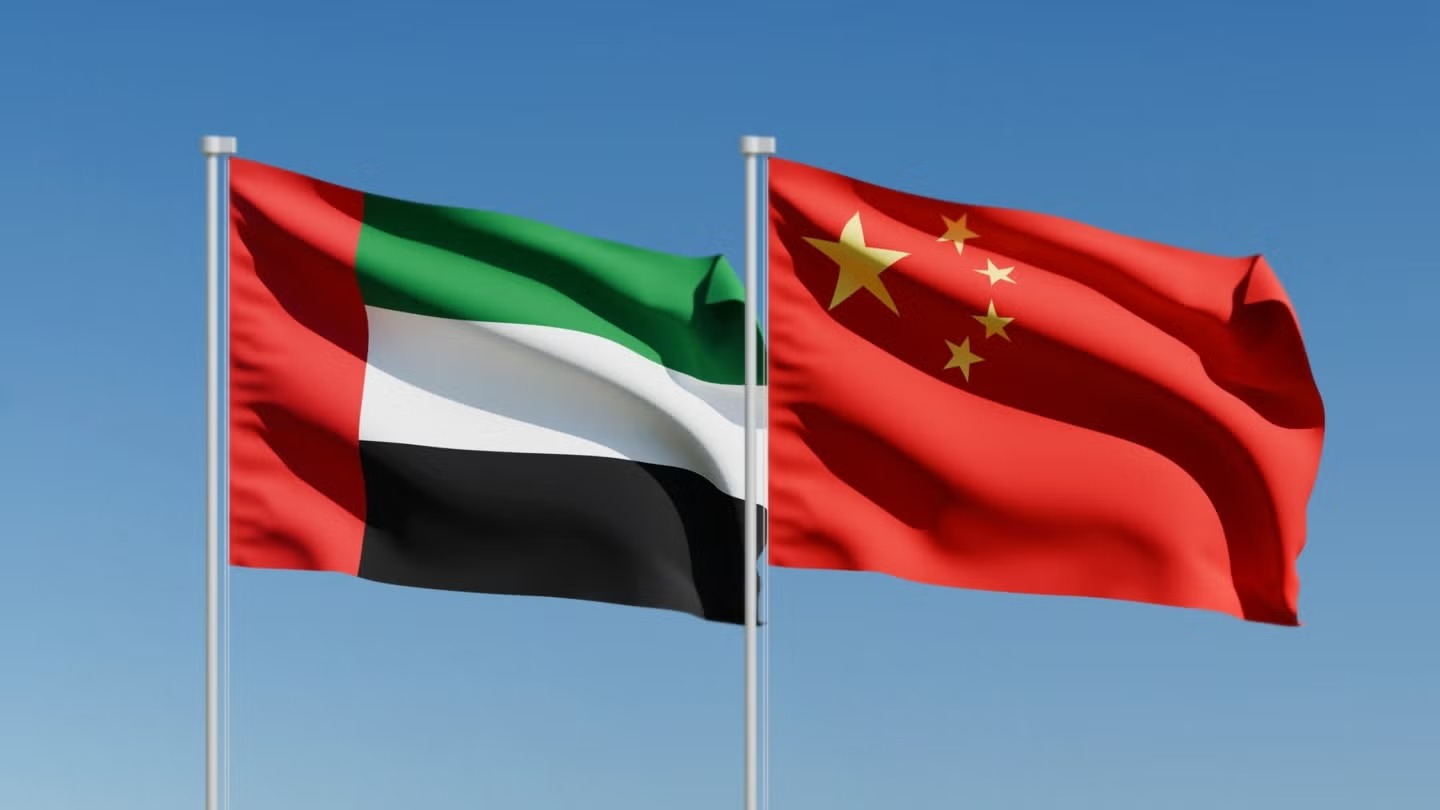
The United Arab Emirates and China have launched Falcon Shield 2026, the latest in a series of joint military exercises that highlight the growing security relationship between Abu Dhabi and Beijing. The exercise marks the fourth consecutive year that the two countries have conducted joint air force training, reflecting a partnership that continues to expand in scope and importance.
Held in China, Falcon Shield 2026 includes flight operations, command simulations, and coordinated drills involving integrated military formations. The exercise is designed to improve operational cooperation and strengthen military coordination between the two nations.
While the growing relationship has attracted international attention, analysts say the UAE is not seeking to replace the United States as its primary security partner. Instead, Abu Dhabi continues to follow a strategy that balances strong ties with Washington while building relationships with other major global powers.
The United States remains the UAE’s most important security ally. American support plays a key role in areas such as air defense, missile defense, intelligence sharing, and advanced military technology. Recent regional conflicts have reinforced the importance of that relationship and demonstrated the critical role the United States continues to play in Gulf security.
However, Emirati leaders have long pursued a policy of diversification. Rather than relying exclusively on one partner, the UAE has worked to develop political, economic, and security ties with a range of countries. China has emerged as one of the most significant of those partners.
By expanding relations with Beijing, the UAE aims to increase its strategic flexibility and reduce dependence on any single power. Officials believe that maintaining strong links with multiple global players gives Abu Dhabi greater freedom in foreign policy decisions and increases its influence in negotiations with major allies.
The growing partnership with China has gained additional significance following the recent conflict involving Iran. From the UAE’s perspective, China occupies a unique position because of its extensive political and economic ties with Tehran.
Emirati policymakers believe that a closer relationship with Beijing could eventually provide indirect benefits in dealing with regional security challenges. The UAE hopes that as Chinese interests in the Gulf expand, Beijing may become more willing to consider Emirati security concerns and encourage restraint from Iran.
This calculation is based on China’s increasing role as a global economic power and its strong commercial connections throughout the Middle East. As trade and investment between China and Gulf states continue to grow, regional governments see opportunities to use those relationships to advance broader strategic objectives.
At the same time, recent events have exposed the limits of that approach. During periods of regional tension, China has generally avoided taking clear sides in disputes involving Iran and Gulf countries. Beijing has preferred to maintain relations with all parties and has shown little interest in offering military guarantees similar to those provided by the United States.
As a result, China’s response during regional crises has highlighted the difference between economic influence and security commitments. While Beijing can play an important diplomatic role, it has not demonstrated a willingness to assume responsibility for defending Gulf states against external threats.
Even so, the UAE does not appear ready to reduce its engagement with China. Instead, Emirati leaders seem determined to deepen the relationship further. Their view is that stronger ties may gradually increase the importance of Emirati interests within Chinese strategic calculations.
Falcon Shield 2026 therefore represents more than a routine military exercise. It serves as a visible symbol of the UAE’s broader foreign policy strategy, which seeks to combine traditional alliances with new partnerships.
The exercise also reflects Abu Dhabi’s effort to build multiple channels of influence in an increasingly complex international environment. By strengthening cooperation with China while preserving close ties with the United States, the UAE hopes to enhance its strategic autonomy and improve its ability to navigate regional challenges.
For Beijing, the growing relationship offers opportunities to expand its presence in one of the world’s most important regions for energy and trade. For the UAE, it provides another tool for managing security risks and strengthening its international position.
The long-term question is whether China’s expanding engagement with Gulf countries will remain focused on military exercises, technology cooperation, and economic investment, or whether Beijing will eventually take a more active role in addressing regional security concerns. The answer may shape the future balance of power in the Gulf and influence how countries like the UAE manage their relationships with both global powers and regional rivals.

