


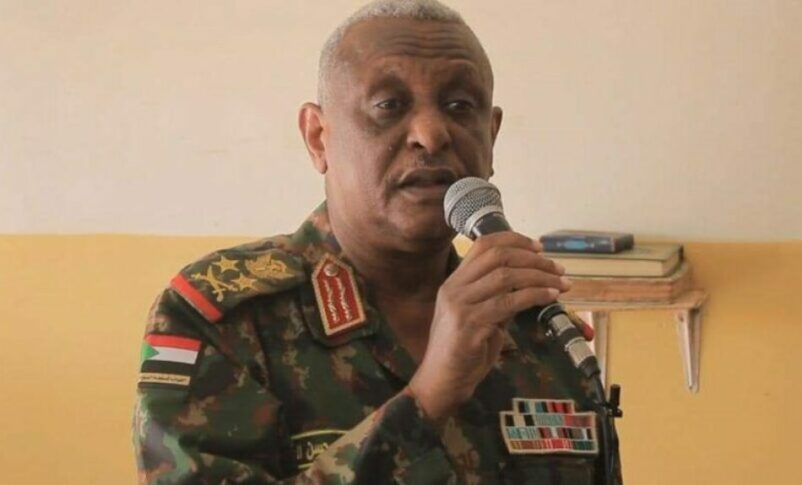
A senior Sudanese military leader has declared that the country’s armed forces will continue their campaign against the Rapid Support Forces despite international diplomatic efforts and growing calls for restrictions on military operations.
Lieutenant General Yasir al-Atta, a member of Sudan’s Sovereign Council and one of the military’s most prominent commanders, said the army remains determined to expand its offensive and regain territory from the paramilitary group.
His comments came as international attention remains focused on the conflict, which has caused widespread destruction, displaced millions of people, and deepened the humanitarian crisis across Sudan.
Speaking to reserve forces in western Omdurman on Tuesday, al-Atta said the military was preparing for a new phase of operations. He told troops that additional offensives would be launched from multiple directions and that the armed forces possessed the resources needed to continue their campaign.
According to al-Atta, military units would coordinate attacks by both land and air as part of efforts to increase pressure on Rapid Support Forces positions across key regions of the country.
The commander also rejected the idea that outside actors could prevent the military from pursuing its objectives. He said international institutions and foreign governments would not be able to halt the army’s advance because military leaders believe they are acting in defense of the nation.
The remarks followed renewed diplomatic activity at the United Nations. A draft proposal submitted by the United States to the UN Security Council reportedly seeks to expand the existing arms embargo on Darfur to cover all of Sudan.
The proposal would also include restrictions on drones and related military equipment. Supporters of the measure argue that broader controls could help reduce the flow of weapons into the conflict and limit further escalation.
Sudan’s civil war has become increasingly dependent on advanced military technologies, including drones, surveillance systems, and long-range weapons. Both sides have sought to strengthen their capabilities as fighting continues across several regions.
Al-Atta used his speech to sharply criticize the Rapid Support Forces, describing the group as a threat to national stability. He vowed that the military would continue operations until the rebellion is defeated and government authority is restored across affected areas.
The commander also repeated accusations that the United Arab Emirates has provided support to the RSF. Sudanese military officials have made similar claims on multiple occasions throughout the conflict.
The UAE has consistently denied those allegations and rejected accusations that it is supplying weapons, equipment, or logistical assistance to the paramilitary force.
The dispute has added a diplomatic dimension to the conflict, with relations between Sudanese authorities and some regional actors becoming increasingly strained as the war continues.
Recent battlefield developments have strengthened the military’s position in several parts of the country. In July, Sudanese armed forces regained control of a number of towns in North Kordofan state after a series of operations against RSF positions.
Among the areas recaptured were Bara, Jabrat al-Sheikh, Umm Sayala, and Um Qirfa. Military analysts said those gains improved logistical access and created new routes toward the Darfur region, where some of the heaviest fighting has taken place.
The recaptured territory has strategic importance because it connects key transportation corridors and supply routes used by both sides during the conflict.
Since securing those areas, the military has increased pressure on RSF positions through expanded air operations. Reports indicate that aircraft and drones have been used to strike targets across Kordofan and Darfur as part of efforts to weaken the paramilitary group’s operational capabilities.
Military planners appear focused on disrupting supply networks and limiting the movement of fighters and equipment. Analysts believe these operations could be intended to prepare the battlefield for broader ground offensives in the coming months.
The conflict between Sudan’s armed forces and the Rapid Support Forces began in 2023 and has since evolved into one of the region’s most serious security crises. Fighting has spread across large parts of the country, affecting major cities and rural communities alike.
International organizations continue to call for ceasefires, humanitarian access, and political negotiations. However, military leaders on both sides have shown little sign of reducing operations.
Al-Atta’s latest comments suggest the Sudanese military intends to maintain its offensive strategy as it seeks to gain further ground against RSF forces. With combat continuing across several fronts, the prospect of a quick resolution remains uncertain, and concerns about the humanitarian impact of the conflict continue to grow.

