


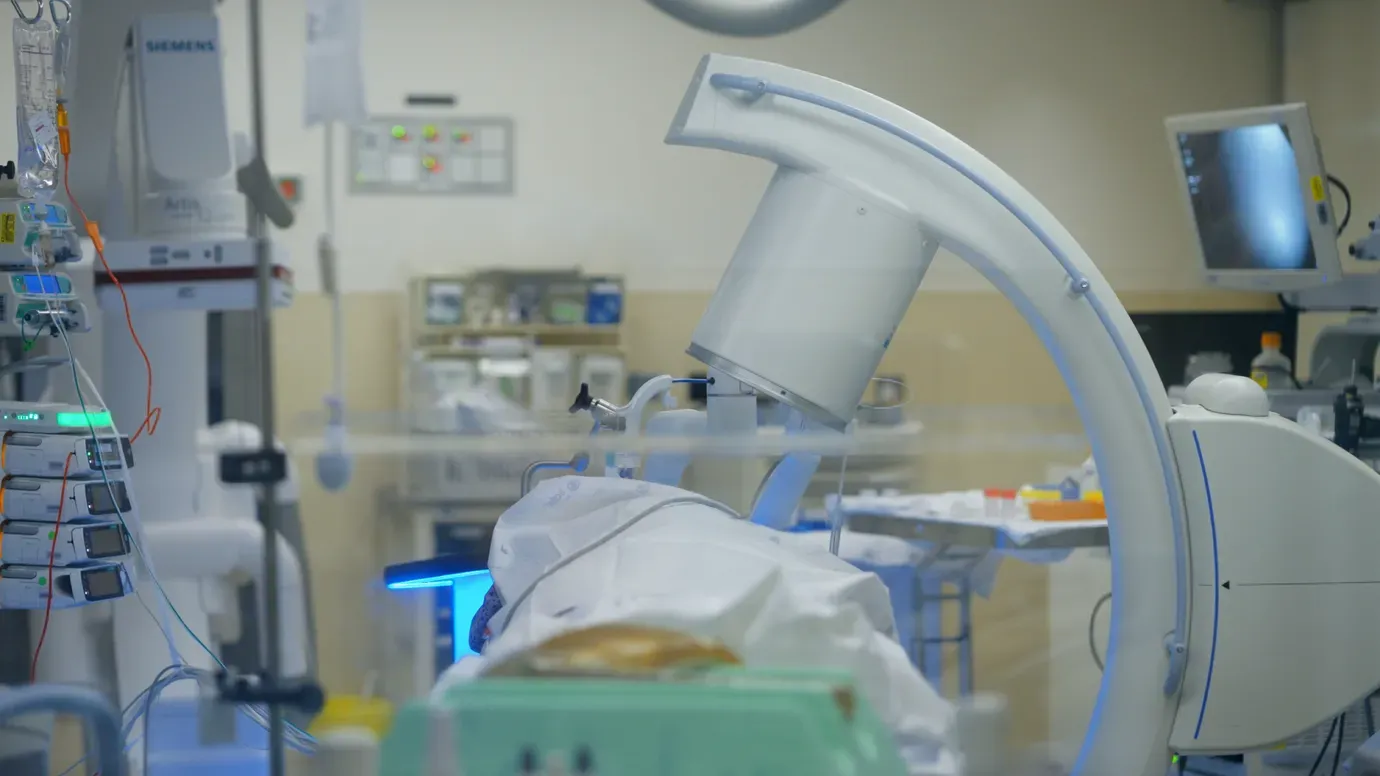
Cleveland Clinic Abu Dhabi has introduced a new robotic technology designed to improve early lung cancer detection and diagnosis. The hospital said the system is the first robotically assisted bronchoscopy platform available in the Middle East and can reach small lung nodules that are often difficult to access using traditional methods.
The technology is expected to help doctors identify lung cancer at an earlier stage, when treatment options are more effective and patient outcomes are generally better. The hospital said the system allows specialists to examine and biopsy tiny lung nodules located deep inside the lungs without the need for open surgery.
The new platform, known as MONARCH, uses robotic assistance to guide a flexible endoscope through the lungs with greater stability and precision. This enables physicians to reach small and hard-to-access areas and collect tissue samples for testing.
According to Cleveland Clinic Abu Dhabi, the technology supports real-time targeting of suspicious lung nodules. This can help doctors make faster and more accurate diagnoses while developing treatment plans at an earlier stage of disease progression.
The procedure is minimally invasive and is performed under general anesthesia. Most procedures are completed within 30 to 75 minutes. Because the technique does not require open surgery, patients may benefit from a safer experience, shorter recovery times, and reduced physical impact compared with more invasive methods.
Health experts say early diagnosis remains one of the most important factors in improving lung cancer survival rates. Detecting cancer during its earliest stages allows doctors to begin treatment sooner and increases the chances of successful outcomes.
Cleveland Clinic Abu Dhabi noted that the technology can help identify lung cancer at Stage 1, where the five-year survival rate exceeds 70 percent. The ability to detect disease before symptoms become severe is considered a major advantage in cancer care.
The robotic system can also be used for conditions beyond primary lung cancer. Doctors may use it to investigate lung nodules caused by cancer that has spread from other parts of the body. It can also assist in diagnosing benign lung nodules, infections such as tuberculosis, and inflammatory lung diseases.
The launch of the technology is supported by the Department of Health – Abu Dhabi as part of broader efforts to expand access to advanced healthcare solutions. The department has continued to promote the use of innovative medical technologies that support prevention, early detection, and more personalized treatment approaches.
Healthcare leaders in Abu Dhabi have increasingly focused on building a proactive healthcare system that emphasizes predicting health risks and identifying diseases earlier rather than relying solely on treatment after symptoms appear.
Hospital officials said the introduction of robotic bronchoscopy reflects ongoing efforts to bring advanced medical technologies to patients across the region. The technology combines precision guidance with minimally invasive procedures, helping improve both patient experience and diagnostic accuracy.
Medical specialists at the hospital believe the platform represents a significant advancement in pulmonary medicine. The ability to reach very small lung nodules deep within the lungs provides physicians with new opportunities to diagnose disease before it becomes more advanced.
Experts also see future possibilities for the technology beyond diagnosis. As robotic capabilities continue to develop, similar systems may assist with cancer treatment procedures, including targeted interventions for lung nodules.
Future applications could include robotic-assisted treatments that use heat, cold therapy, or ablation techniques to destroy abnormal tissue without the need for major surgery. These approaches could further expand treatment options for patients diagnosed with lung conditions.
The introduction of robotically assisted bronchoscopy marks another step in Abu Dhabi’s efforts to strengthen its healthcare sector through innovation. By expanding access to advanced diagnostic tools, healthcare providers aim to deliver earlier diagnoses, more precise treatment decisions, and improved outcomes for patients.
With lung cancer remaining one of the most serious health challenges worldwide, the availability of this technology in the Middle East may help support earlier detection and better care for patients across Abu Dhabi and the wider region.

