


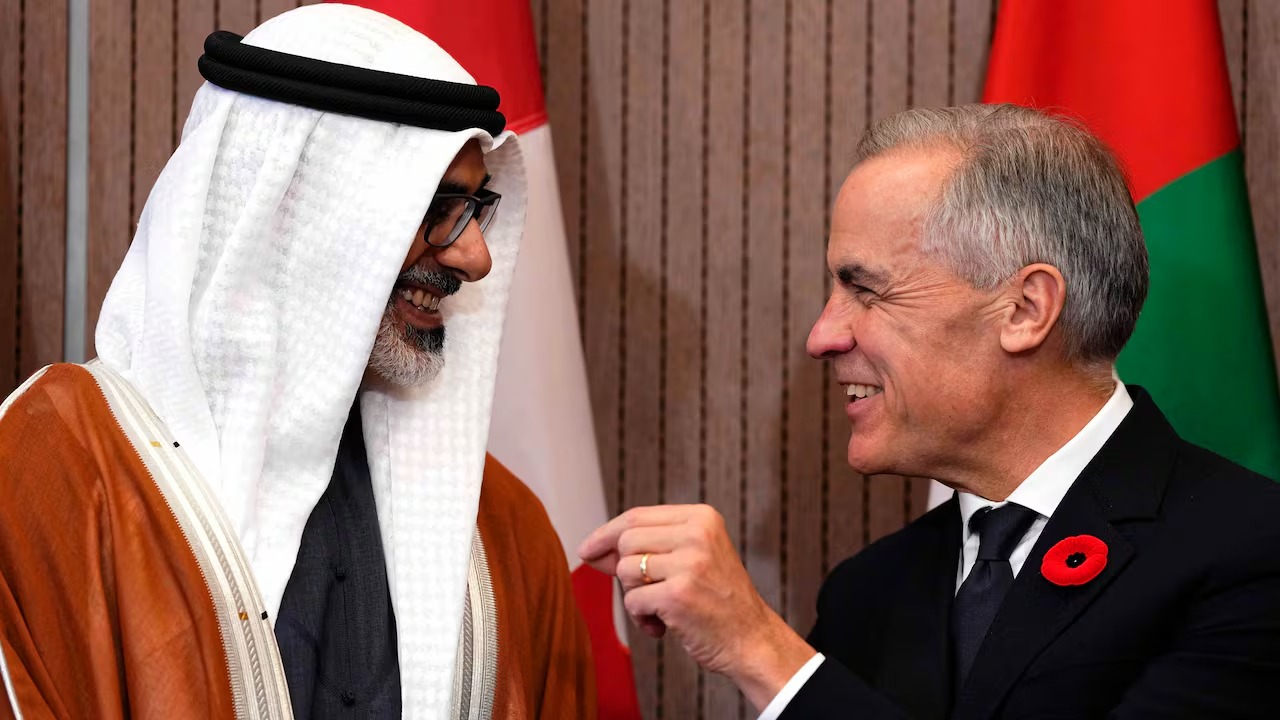
Canada and the United Arab Emirates have signed new agreements to boost trade, energy and investment. The deals came during a visit to Ottawa by Abu Dhabi Crown Prince Sheikh Khaled bin Mohamed bin Zayed Al Nahyan.
Prime Minister Mark Carney welcomed the crown prince to Parliament Hill on Tuesday. The visit marked another step in efforts to build closer ties between the two countries. The agreements cover free trade, clean power, energy infrastructure and diplomatic training.
The two governments say their growing partnership could open new paths for business and investment. It also comes as Canada seeks to expand its trade links and reduce its reliance on the United States.
Carney met with the crown prince and said the visit would strengthen ties that have grown over the past year. Ministers from both countries signed agreements to support joint work in several key areas.
One major step came earlier this year when Canada and the UAE finished talks on a free trade agreement. Both sides described the process as a record, as negotiations took just 47 days.
The agreement is expected to help businesses in both countries reach new markets. It could also support trade in goods and services while creating more chances for firms to invest across borders.
The visit included high-level meetings and formal events in Ottawa. The crown prince arrived with a motorcade that included four horses from the Royal Canadian Mounted Police. The display added a ceremonial touch to the visit.
On Monday, Carney hosted a state dinner for the crown prince in downtown Ottawa. During the event, the prime minister said both countries shared a strong desire to build for the future.
The new deals build on commitments made during Carney’s visit to the UAE last year. In November, he said Canada was working on a $1 billion project to expand its ability to process critical minerals.
Critical minerals are used in many products, including electric car batteries, clean energy systems and modern electronics. Canada wants to build more of this capacity at home and strengthen its role in global supply chains.
During the same period, the UAE pledged to invest about $70 billion in Canada. The proposed investment could support major projects and help create new links between companies in both countries.
International Trade Minister Maninder Sidhu said the money could flow into several sectors. These include mining, logistics, energy and digital technology.
Sidhu said UAE investors were actively looking for ways to put the funds to work. He added that further public details could be shared soon.
The possible investment is important for Canada’s plans to attract capital from a wider range of countries. Stronger links with the UAE could help Canadian firms find new partners and reach more buyers.
The focus on energy and infrastructure may also create room for cooperation on clean power. Both countries have shown interest in projects that can support future energy needs and help modernize key systems.
However, the growing relationship also raises questions about human rights. The UAE has faced criticism from rights groups over its record and restrictions on political freedoms.
Asked about these concerns, Sidhu said human rights remained an important part of Canada’s approach. He said Canada needed to keep engaging with other countries and raise concerns when needed.
Sidhu stressed that human rights would not take a back seat. He argued that direct talks give Canada a chance to discuss difficult issues with its partners.
His comments reflect a challenge facing the Canadian government as it seeks new trade and investment ties. Stronger economic links can create jobs and support growth, but they can also lead to questions about how governments address differences over rights and political values.
For Canada, the UAE offers a possible source of major investment and a partner in energy, technology and trade. For the UAE, closer ties with Canada could create new business opportunities and strengthen its links with a major Western economy.
The agreements signed in Ottawa mark progress in that effort. The next step will be to turn the pledges into real projects, new trade flows and long-term business ties.
With free trade talks completed and major investment plans under discussion, both governments appear ready to deepen their partnership. The scale and pace of future projects will show how much the new agreements can deliver for businesses and workers in both countries.

