


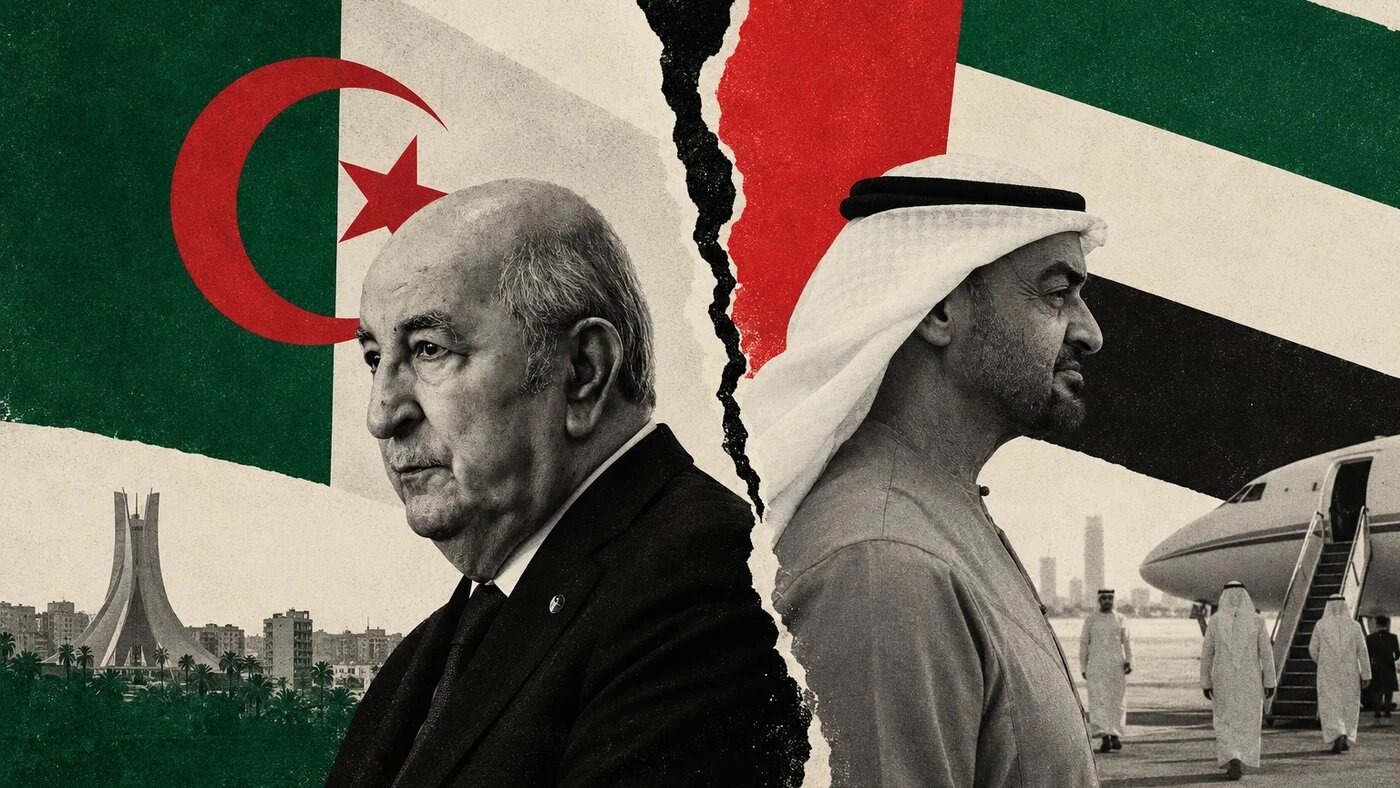
Algeria’s decision to cut diplomatic relations with the United Arab Emirates marks the culmination of years of growing tensions that gradually expanded beyond regional policy disagreements into broader concerns about national sovereignty and security.
The break in relations, announced on Thursday, followed a long period during which Algeria and the UAE maintained cooperation despite major differences on several regional issues. For years, Algerian leaders managed to separate bilateral relations from disputes involving Western Sahara, Libya, Israel, and the Sahel region.
That approach allowed cooperation to continue even when both countries supported opposing positions in key regional conflicts. Economic partnerships remained active, political contacts continued, and military cooperation was maintained despite clear foreign policy differences.
In early 2023, Algeria hosted a meeting of the joint military cooperation committee with UAE representatives. During the same period, economic officials from both countries met in Abu Dhabi and signed several agreements. Algerian leaders were still discussing the possibility of developing a strategic partnership with the Gulf state.
Political engagement also continued. Algerian President Abdelmadjid Tebboune and UAE President Sheikh Mohammed bin Zayed held discussions on the sidelines of international meetings in 2024, even as tensions became increasingly visible.
The UAE had already taken positions that conflicted with Algerian foreign policy goals. Abu Dhabi supported Morocco’s claim over Western Sahara by opening a consulate in Laayoune in 2020. Algeria, meanwhile, continues to support the Polisario Front, which seeks independence for the territory.
The UAE also normalized relations with Israel and backed Libyan military commander Khalifa Haftar, positions that differed sharply from Algeria’s regional outlook. Despite these disagreements, cooperation between the two countries continued for several years.
The relationship began to change significantly after late 2023. Algerian officials and media outlets increasingly linked various diplomatic setbacks to Emirati actions and influence.
One major source of frustration was Algeria’s unsuccessful effort to join the expanded BRICS group. Media close to the Algerian government later suggested that Emirati diplomacy may have worked against Algeria’s candidacy during discussions among member states.
Although no public evidence was released to support those claims, the accusations reflected a broader shift in Algerian thinking. The UAE was no longer viewed only as a rival on regional issues but increasingly as a factor in Algeria’s own diplomatic challenges.
Developments in Mali further intensified concerns. In late 2023, Malian forces and their Russian allies regained control of Kidal, a key northern city. Soon after, Mali ended a 2015 peace agreement that had given Algeria an important role in regional mediation efforts.
The collapse of that agreement reduced Algeria’s influence in northern Mali and weakened one of its key security tools along its southern border. While the UAE was not responsible for those developments, its growing security ties with Mali drew increased attention in Algiers.
The Gulf nation expanded cooperation with Bamako, supported regional security initiatives, and supplied military equipment. As Algeria’s regional influence declined, officials increasingly viewed Emirati activity in the Sahel through a security lens.
The dispute later moved beyond foreign policy and entered domestic political discussions. In January 2024, Algeria’s High Security Council discussed what it described as hostile actions by an unnamed Arab country. Although the UAE was not identified directly, many observers viewed the comments as a reference to Abu Dhabi.
Over the following two years, concerns about Emirati influence appeared more frequently in official statements, state media coverage, and government policies.
A controversy involving comments about Amazigh identity on an Emirati media platform added another layer to the dispute. Algerian authorities treated the issue not simply as a media disagreement but as a challenge to national unity and social cohesion.
By 2026, President Tebboune openly raised concerns about foreign interference in Algeria’s domestic affairs. He also referred to disputes involving Emirati investments and possible international arbitration cases.
At the same time, economic ties remained partially intact. Emirati companies continued operating in Algeria’s logistics sector, and some industrial partnerships remained active despite increasing political tensions.
The gradual nature of the split reflected the complexity of the relationship. While political trust declined rapidly, economic agreements and long-term business arrangements proved harder to unwind.
The decision to sever diplomatic relations ultimately reflected a broader change in how Algeria viewed the UAE. What began as disagreements over regional policy evolved into a larger debate about sovereignty, influence, and national security.
For Algerian leaders, foreign policy disputes, economic concerns, media controversies, and allegations of political interference increasingly became part of the same issue. That shift helped transform years of tension into a full diplomatic rupture.
The break also reflects wider changes taking place across North Africa and the Middle East, where competition for influence continues to reshape regional alliances and partnerships.

