


Abu Dhabi companies have announced a series of agreements with German partners that could generate more than €5 billion in new investments, strengthening economic ties between the United Arab Emirates and Germany across energy, technology, and industrial sectors.
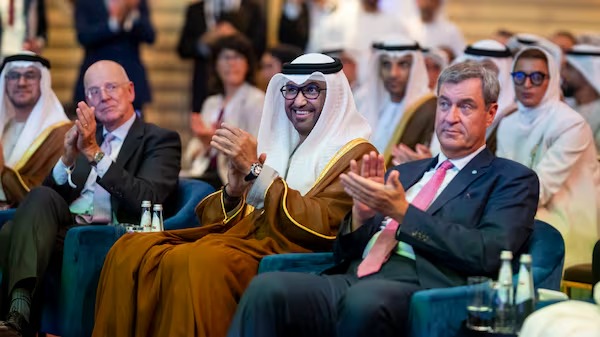
The agreements were unveiled during the state visit of UAE President Sheikh Mohamed bin Zayed Al Nahyan to Germany. The announcements followed the broader commitment by the UAE to invest €40 billion in Germany, highlighting the growing strategic partnership between the two nations.
The latest agreements involve major UAE companies, including Adnoc, XRG, Fertiglobe, Ta’ziz, and Masdar. German partners include RWE, Securing Energy for Europe (SEFE), Covestro, MB Energy, Siemens Energy, Siemens Industrial, Bosch Middle East, and Luxcara.
The deals cover a wide range of sectors, including liquefied natural gas, renewable energy, advanced manufacturing, artificial intelligence, and low-carbon industrial development.
Dr Sultan Al Jaber, UAE Minister of Industry and Advanced Technology and managing director and group chief executive of Adnoc, said the agreements represent another important step in the long-standing relationship between the UAE and Germany.
He said the new investment plans and commercial partnerships build on decades of co-operation and are designed to support economic growth, innovation, and long-term prosperity in both countries.
One of the most significant agreements was signed between Adnoc and German energy company RWE. Under the arrangement, the companies will work together to deliver liquefied natural gas to Germany, other European markets, and selected Asian customers.
The LNG supplies are expected to come from Adnoc and XRG, Adnoc’s international energy investment arm. Deliveries are projected to begin during the early years of the next decade.
Another major development involves Ta’ziz, the industrial joint venture between Adnoc and Abu Dhabi investment company ADQ. Ta’ziz signed a letter of intent with German chemicals group Covestro to advance plans for a new facility in Ruwais.
The project remains in the planning stage, with both companies expected to work toward a final investment decision before construction begins. Production could potentially start after 2030.
Adnoc and XRG also entered into an agreement with SEFE to explore opportunities in natural gas supply, infrastructure development, logistics, and portfolio optimisation. The partnership aims to support Europe’s long-term energy security while improving market efficiency.
In the industrial sector, Fertiglobe signed an agreement with Covestro and MB Energy to examine the development of low-carbon ammonia supply chains between the UAE and Germany.
Low-carbon ammonia is increasingly viewed as an important component of future clean energy systems because of its potential use in industrial processes and energy transportation.
Renewable energy also featured prominently in the new agreements.
Masdar and German energy company RWE signed an agreement to evaluate future co-operation in offshore wind projects. The companies will consider participating together in upcoming offshore wind auctions in Germany.
Masdar also signed a separate agreement with Luxcara to establish a strategic partnership focused on offshore wind and battery storage projects. The collaboration will explore investment opportunities not only in Germany but also across wider European markets.
In addition to energy projects, Adnoc signed agreements with Siemens Energy, Siemens Industrial, and Bosch Middle East. These partnerships will focus on advanced technology, digital innovation, and artificial intelligence applications.
The agreements were announced alongside the launch of the UAE-Germany Investment Council. The new body is expected to bring together government institutions, investors, and private-sector companies to identify investment opportunities and accelerate growth in priority industries.
The latest deals underline the expanding economic relationship between the UAE and Germany. As both countries increase co-operation in energy security, renewable power, technology, and industrial innovation, the agreements are expected to create new business opportunities while supporting long-term economic growth in both markets.

