


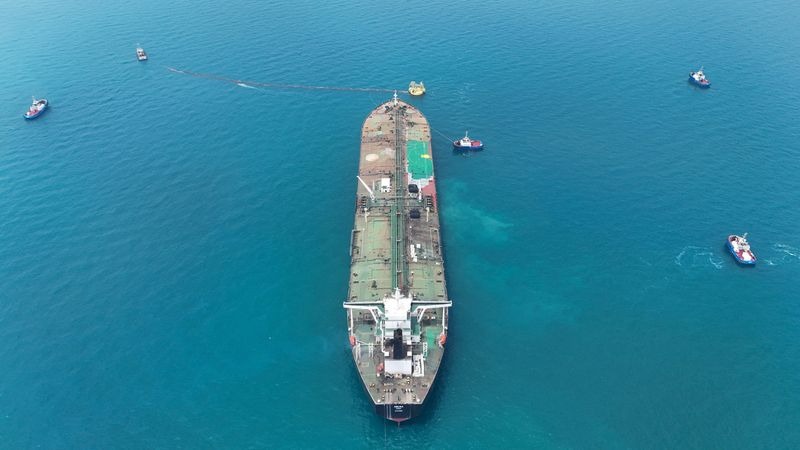
Abu Dhabi National Oil Company has significantly increased its purchases of Iraqi crude oil, expanding its role in regional energy trading as Gulf supply chains continue adjusting to disruptions caused by the Iran conflict.
According to sources familiar with the matter, ADNOC acquired millions of barrels of discounted Iraqi crude during August and September, becoming the largest buyer of Iraqi oil exports during the period. The purchases helped Iraq increase shipments after exports were heavily affected during the early months of the regional conflict.
The move highlights ADNOC’s growing influence in global oil trading as well as the changing energy landscape across the Gulf. By taking advantage of discounted supplies and its expanding transportation network, the UAE energy giant has strengthened its position in regional crude markets.
Sources said ADNOC agreed to purchase 32 million barrels of Iraqi crude in August at discounts ranging from approximately $24.90 to $27 per barrel. Additional agreements were reached in September for another 40 million barrels.
The September allocation reportedly included 10 million barrels purchased at an $18-per-barrel discount and another 30 million barrels sold at discounts reaching $25 per barrel.
One Iraqi energy source said ADNOC became the largest lifter of Iraqi crude during both August and September. However, logistical constraints affected final export volumes.
According to a second Iraqi source, Iraq’s State Oil Marketing Organization allocated ADNOC 32 million barrels in August, but only 20 million barrels were ultimately lifted because export limitations reduced available supplies.
The source added that ADNOC has already lifted approximately 14 million barrels during September as exports continue to recover.
Another industry source said the company purchased around 20 million barrels through tenders covering September and October deliveries at discounts ranging between $25 and $27 per barrel.
ADNOC was not the only company attracted by the discounted pricing. Iraqi crude offered at reduced rates also drew interest from major international energy traders and oil companies seeking opportunities created by market disruptions.
The increased demand for Iraqi oil comes after several months of export challenges. Iraq’s position at the northern end of the Gulf and its limited tanker fleet complicated shipments during the height of the regional conflict.
The situation improved after Iran permitted several tankers carrying Iraqi crude to pass through the Strait of Hormuz following diplomatic efforts by Baghdad.
Those developments helped Iraq gradually restore exports after significant declines earlier in the year.
According to shipping and market data, Iraqi oil exports have averaged about 2 million barrels per day this month. While that remains below August levels of approximately 2.35 million barrels per day, it represents a substantial recovery from July, when exports averaged about 1.37 million barrels per day.
At the same time, UAE crude exports have continued rising.
Export data indicate UAE shipments reached roughly 3.24 million barrels per day this month, compared with 2.89 million barrels per day in August and 2.87 million barrels per day in July.
The increase reflects ADNOC’s ability to maintain exports despite ongoing regional security concerns.
Since the outbreak of the conflict, ADNOC has relied on an expanding fleet of tankers and strategic infrastructure investments to ensure continued market access. A key advantage has been the UAE pipeline network connecting oil fields to the port of Fujairah on the Gulf of Oman.
That route allows oil shipments to bypass the Strait of Hormuz, reducing exposure to potential disruptions in one of the world’s most important maritime energy corridors.
Industry observers say the infrastructure has become increasingly valuable during periods of regional instability.
The purchases also come amid signs of improving diplomatic relations between Iran and the UAE.
During the recent BRICS summit in New Delhi, Iranian President Masoud Pezeshkian met UAE Crown Prince Sheikh Khaled bin Mohamed bin Zayed Al Nahyan. Iranian officials said both sides agreed to move beyond past tensions and strengthen cooperation.
Although regional security concerns remain, the meeting was viewed as a positive signal for Gulf stability and energy markets.
Sources said ADNOC intends to process much of the Iraqi crude at its Ruwais refinery, one of the largest refining complexes in the Middle East. By refining imported crude, the company can increase exports of its own production to international buyers.
The strategy allows ADNOC to maximize trading opportunities while strengthening the UAE’s position as a major energy hub.
As Gulf oil markets continue adapting to the effects of the Iran conflict, ADNOC’s growing role in Iraqi crude trading demonstrates how regional energy companies are reshaping supply networks and taking advantage of new market opportunities created by changing geopolitical conditions.

