


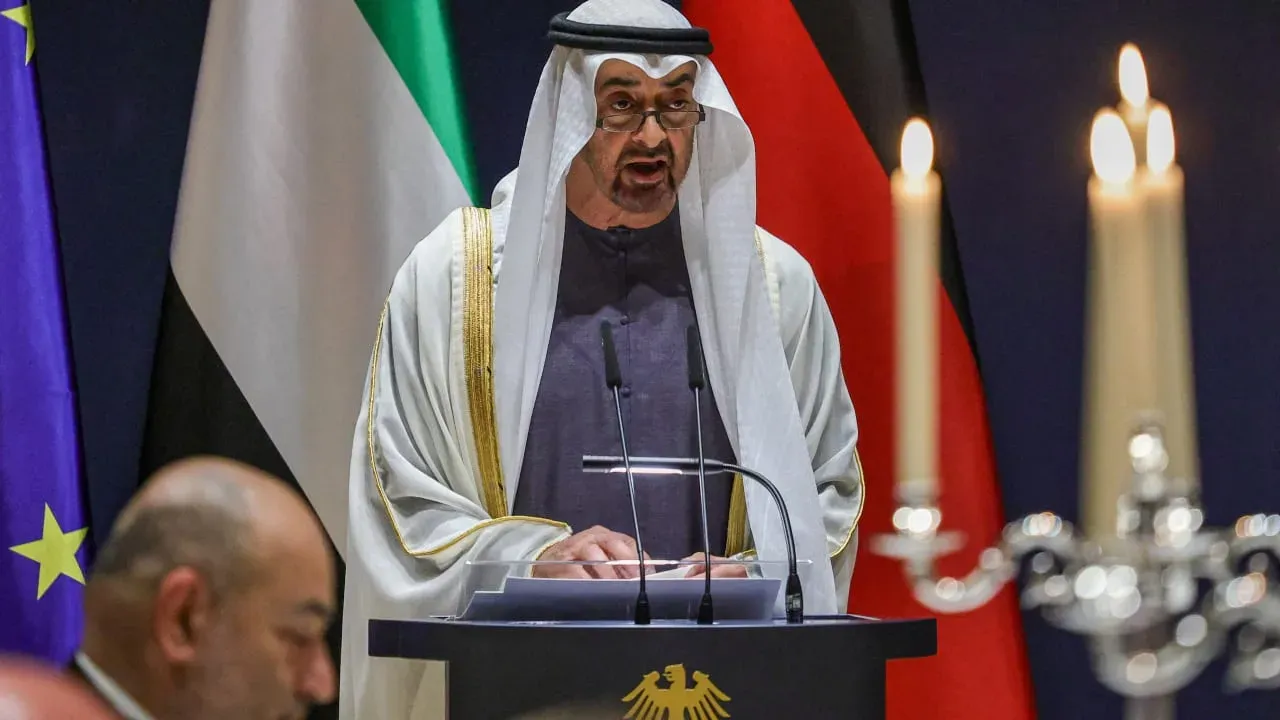
United Arab Emirates President Sheikh Mohammed bin Zayed Al Nahyan and Israeli Prime Minister Benjamin Netanyahu held talks on Sunday during a visit by the Israeli leader to Abu Dhabi, according to official statements released by both governments.
The meeting marked a significant diplomatic engagement between the two countries and focused on strengthening bilateral relations as well as addressing key regional developments. The visit also underscored the growing strategic relationship that has emerged since the signing of the Abraham Accords in 2020.
The UAE’s state news agency confirmed the meeting on Monday, making it one of the rare occasions in which Emirati authorities publicly acknowledged a visit by a senior Israeli official. The confirmation attracted attention because the UAE has often remained discreet regarding visits involving Israeli leaders.
According to the Israeli Prime Minister’s Office, Netanyahu traveled to the UAE at the invitation of President Mohammed bin Zayed. The statement said discussions centered on improving cooperation between the two countries and reviewing challenges facing the wider region.
Netanyahu was accompanied by a senior delegation that included key national security and foreign policy officials. Members of the delegation included the head of Israel’s National Security Council, senior intelligence officials, military advisers, and diplomatic staff.
Officials familiar with the discussions said the meeting lasted several hours and included extensive talks on regional security matters. Iran was reportedly among the major topics discussed during the closed-door discussions.
The meeting took place during a period of heightened regional uncertainty and ongoing efforts by Gulf states to strengthen security partnerships. Analysts say both countries continue to share concerns about regional stability, maritime security, and the future balance of power in the Middle East.
The visit also generated attention because of reports concerning claims related to intelligence warnings before the October 7 Hamas attack. Media reports suggested that Netanyahu had discussed the issue during his meeting with the Emirati leader.
However, the Prime Minister’s Office firmly rejected those reports. In a statement, Israeli officials described the claims as inaccurate and insisted that the discussions focused exclusively on bilateral relations and regional issues.
The denial came amid continuing political debate over intelligence assessments and security decisions connected to the events leading up to the October 7 attack. Israeli officials said those matters were not part of the Abu Dhabi discussions.
The latest meeting also follows earlier reports of a separate visit involving Netanyahu and the UAE president. Earlier this year, reports emerged claiming that the two leaders had met privately in the UAE. At the time, Emirati authorities denied that such a meeting had taken place.
The renewed public confirmation of Sunday’s talks therefore represents an important diplomatic signal. Observers say it reflects the growing maturity of relations between the two countries despite ongoing regional challenges.
Since establishing formal relations under the Abraham Accords, Israel and the UAE have expanded cooperation in trade, technology, investment, tourism, and security. Economic ties have grown steadily, and both governments have emphasized the benefits of closer regional cooperation.
Regional developments have also influenced the relationship. The UAE has strengthened coordination with both the United States and Israel in recent years as it seeks to enhance its security partnerships and expand its diplomatic influence.
Experts note that the relationship provides the UAE with a direct channel for communication with Israeli leaders while also supporting broader engagement with Washington. For Israel, the partnership offers opportunities for deeper cooperation with a key Gulf state and increased regional integration.
The meeting between Netanyahu and Mohammed bin Zayed comes at a time when Middle Eastern governments continue to navigate conflicts, security concerns, and shifting alliances. Discussions involving Iran, regional stability, and economic cooperation remain central topics for policymakers across the region.
While details of the private conversations remain limited, officials from both sides have emphasized the importance of maintaining dialogue and strengthening bilateral ties. The visit highlights the continuing importance of the Israel-UAE relationship and its role in shaping regional diplomacy.
As both countries seek to deepen cooperation, Sunday’s talks are likely to be viewed as another step in the ongoing effort to expand political, economic, and security coordination across the Middle East.

