


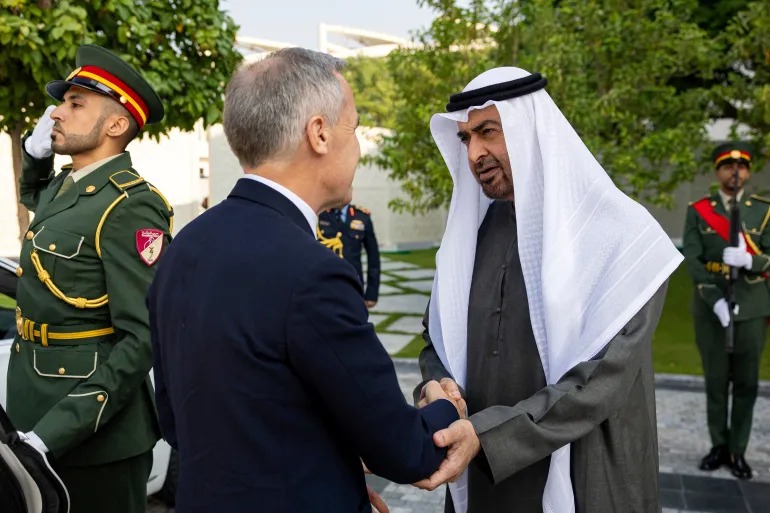
Canada and the United Arab Emirates have signed a major trade agreement aimed at increasing exports, attracting investment and reducing barriers for businesses. The deal is part of Canadian Prime Minister Mark Carney’s plan to expand trade with countries outside the United States as tensions with Washington continue.
The Comprehensive Economic Partnership Agreement, known as CEPA, was signed on Tuesday by representatives of both countries. Carney and Abu Dhabi Crown Prince Sheikh Khaled bin Mohamed bin Zayed Al Nahyan attended the signing.
The agreement aims to make trade easier by lowering tariffs, reducing red tape and improving access to each country’s market. It is expected to take effect in 2027, once the required steps are completed.
Canada’s government said the deal would reduce or remove tariffs on more than 99% of current Canadian exports to the UAE. The change could give Canadian businesses a wider customer base and help them compete in one of the Middle East’s major commercial markets.
Canadian farmers are among the groups expected to benefit. Producers of pulses and canola could gain better access to buyers in the UAE. Manufacturers of industrial machinery and power generation equipment may also find new opportunities.
The agreement is also expected to support Canada’s aerospace sector and companies working in technology and innovation. Other industries that could benefit include forestry, fishing, seafood, environmental services and engineering.
The Canadian government said CEPA would address non-tariff barriers as well. These barriers can include complex rules, paperwork and other requirements that make it harder for businesses to sell goods and services abroad.
By making trade rules clearer and more predictable, the agreement aims to reduce uncertainty for companies planning to invest or expand. Supporters say better market access could encourage more business partnerships and increase the flow of goods and services between the two countries.
The deal comes as Carney seeks to reduce Canada’s reliance on the US market. The United States remains Canada’s largest trading partner, but trade tensions and tariffs introduced by US President Donald Trump have placed pressure on Canadian businesses.
Carney has pledged to double Canada’s non-US trade over the next decade. His government has been pursuing new trade agreements and stronger economic links with partners across Europe, Asia and the Middle East.
Efforts to reach new arrangements with Washington have faced difficulties. As a result, Canada has stepped up its search for alternative markets and investment opportunities.
The UAE is an important part of that strategy. It is Canada’s largest export market in the Middle East and buys Canadian vehicles, vehicle parts and machinery. Its location and business links also make it a gateway for companies seeking access to markets across the wider region.
Trade between Canada and the UAE has grown in recent years. Government figures show that two-way trade reached about 3.5 billion Canadian dollars, or approximately $2.48 billion, last year. Trade has increased by around 10% annually over the past few years.
The new agreement is designed to build on that growth. Lower tariffs and fewer trade barriers could help Canadian exporters increase sales while giving UAE businesses more opportunities to access Canadian goods and services.
Investment is another key part of the relationship. The UAE committed up to $50 billion in investment in Canada last year. The proposed investment could support projects across several sectors and create closer links between companies in both countries.
UAE Foreign Trade Minister Thani bin Ahmed Al Zeyoudi said the agreement offered strong potential for private businesses. He pointed to opportunities in logistics, communications, advanced technology and manufacturing.
Al Zeyoudi signed the agreement with Canada’s Minister of International Trade, Maninder Sidhu. Both governments have presented the deal as a step toward stronger economic ties and a more diverse trade relationship.
Alongside CEPA, the two countries signed preliminary agreements covering energy, diplomacy and defence cooperation. These arrangements show that the partnership extends beyond goods and services to include broader areas of government and economic activity.
However, the full impact of the trade deal will depend on how quickly businesses take advantage of the new rules. Companies will need to understand the agreement’s terms, identify potential customers and meet any remaining regulatory requirements.
The expected start date in 2027 also means businesses may have to wait before all tariff changes take effect. The governments will need to complete the required processes and put the agreement into practice.
For Canada, the deal offers another route to reach customers outside the US market. For the UAE, it creates an opportunity to deepen trade with a major North American economy and attract more business partnerships.
The agreement does not remove the importance of Canada’s relationship with the United States. Instead, it reflects Ottawa’s effort to spread trade across more markets and reduce the risks of relying too heavily on one partner.
As implementation moves forward, exporters and investors will watch whether the agreement leads to higher trade volumes, new projects and stronger commercial links between Canada and the UAE.

