


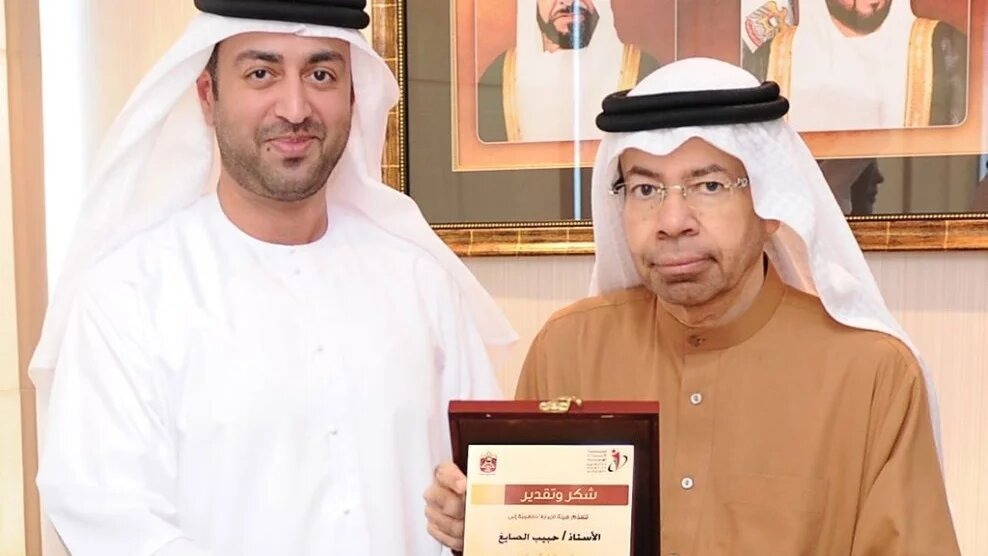
A US-based human rights group has urged the United Nations to investigate the reported death of Emirati poet and writer Habib al-Sayegh. The call follows allegations in a new book that he was kidnapped, tortured and killed while in state custody in the United Arab Emirates in 2019.
Democracy for the Arab World Now (DAWN) said the claims require an independent investigation. The group wants the UN to seek official records from the UAE and help establish what happened to the writer. It also wants his family to learn the truth about his final days and the location of his grave.
The allegations appear in “Princes and Thieves,” a book by author Matthew Cole published last week. The book claims that al-Sayegh was taken from his home and held in prison, where interrogators tortured him. According to the account, he suffered severe injuries before dying between August 16 and 19, 2019.
Al-Sayegh was 64 when he died. He was a respected figure in Arab literature and held senior roles in writers’ groups. He chaired the board of the Emirates Writers and Writers Union and served as secretary-general of the General Union of Arab Writers. He also worked as editor-in-chief of the newspaper Al Khaleej.
The book alleges that interrogators pulled out several of his teeth with pliers. It also claims they repeatedly struck him with a sharp metal object. These claims have not been independently established, making an impartial investigation important to determine whether the reported abuse took place.
DAWN said the alleged injuries could provide evidence that investigators should examine. The group argued that a forensic review of al-Sayegh’s remains could help establish the cause and circumstances of his death.
“Injuries of that kind leave marks that a forensic examination of the remains could detect,” the group said on Thursday. It added that only an independent inquiry could answer the many questions about his fate.
Raed Jarrar, DAWN’s advocacy director, sent a letter to three UN special rapporteurs on Thursday. He asked them to press the UAE to release al-Sayegh’s death certificate, the recorded cause of death and any records related to his alleged detention. He also called for an official response to the claims made in the book.
The letter further asked the UN experts to seek access for al-Sayegh’s family and an independent forensic expert. Their task would be to confirm where he is buried and examine the condition of his grave.
Cole’s book also alleges that Emirati officials kept al-Sayegh’s body for more than a day after his death. According to the account, officials prevented his family from viewing the body before his burial in Abu Dhabi. The book further claims that his remains were later moved from the cemetery to an unmarked grave in the desert, preventing relatives from visiting the burial site to pray.
These claims have raised further questions about how officials handled the writer’s death and whether his family was denied basic information. An independent examination could help clarify the reported events and determine whether any laws were broken.
Jarrar asked the UN experts to share their findings with the Human Rights Council and seek accountability for any violations of international law they identify.
The allegations have also drawn attention to the UAE’s human rights record. Jarrar noted that the country is a party to the UN Convention against Torture. The treaty requires states to take steps to prevent torture and address credible allegations of abuse.
DAWN was founded by Jamal Khashoggi, the Saudi journalist and former columnist who was killed inside Saudi Arabia’s consulate in Istanbul in October 2018. His killing drew international criticism and renewed calls for accountability in cases involving alleged abuses by state officials.
Al-Sayegh had received an honorary award from the UAE in 2012 for his contributions to the country’s national identity. His death was announced by the state news agency on August 20, 2019, but the announcement did not disclose the cause of death.
Nine days before the announcement, al-Sayegh had published a column criticizing efforts to normalize relations with Israel. In the article, dated August 11, he described Israel as a “real and natural enemy” and questioned who had authorized supporters of normalization to speak on behalf of others.
In September 2020, the UAE formally established relations with Israel through an agreement signed at the White House during Donald Trump’s first presidential term. Relations between the two countries have since expanded across several areas.
The UAE has also faced criticism over its position on the Israeli-Palestinian conflict. After the Hamas-led attacks on southern Israel on October 7, 2023, and the subsequent war in Gaza, Abu Dhabi continued to maintain ties with Israel. The UAE has also faced questions over its reported opposition to an Arab League proposal for Gaza and its position on plans involving the displacement of Palestinians.
However, the central issue raised by DAWN remains the circumstances surrounding al-Sayegh’s death. The group says official records, access to the grave and an independent forensic examination are needed to test the allegations and establish the facts.
The claims in the book remain allegations, and an independent investigation would be needed to verify them. DAWN is asking the UN to seek answers from the UAE and help ensure that the writer’s family receives clear information about his death.

