


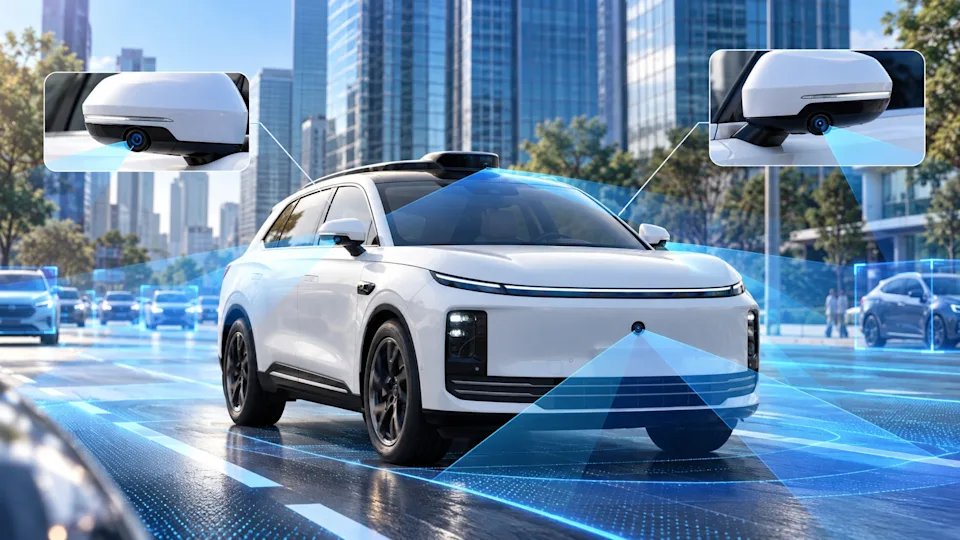
Chery Auto plans to showcase a new driverless Robotaxi at its 2026 Chery International User Summit in Wuhu, China. The event will run from October 19 to 23. The company will also sign a strategic cooperation agreement with UAE-based K2 as it works to expand its autonomous driving business overseas.
The vehicle is designed for Level 4 autonomous driving. This means it aims to handle driving tasks without a human driver in defined operating conditions. Chery says the Robotaxi has been built for driverless service from the start, rather than being a regular car later changed to support autonomous driving.
The planned launch comes as carmakers seek ways to bring self-driving transport into daily use. Companies must address safety, operating costs, local rules and the needs of passengers before such services can expand to more markets.
Chery says its Robotaxi is designed around five key principles. These include native vehicle architecture, factory integration, passenger experience, daily operations and global adaptability. The company aims to bring the hardware and software together during vehicle development and production.
A key part of the plan is to make the passenger journey simple. During an on-site demonstration, visitors will be able to see how a ride works from booking to arrival. Passengers use an app to request a trip, while a cloud-based dispatch system sends a Robotaxi to the pickup point.
The app is also designed to give passengers control before they enter the vehicle. Riders can adjust the cabin temperature remotely. When the car arrives, its hazard lights show that it is ready for boarding. Passengers can unlock the doors and open the trunk with a single tap.
The process is intended to work without an onboard driver. Chery says the design aims to provide a quiet and private trip, with little need for manual action from pickup to the end of the journey.
The company is also focusing on what happens when the vehicle is not carrying passengers. Its planned operating cycle includes deployment, repositioning, energy replenishment, self-service cleaning and vehicle inspections. These tasks are intended to help keep vehicles ready for service and lower fleet maintenance costs.
For Robotaxi operators, the ability to manage vehicles between trips can be as important as the driving system itself. Cars need to return to service quickly, receive regular checks and maintain enough energy for their next trips. Automated fleet processes may help operators manage larger groups of vehicles, though the final results will depend on real-world performance.
Safety is another major part of Chery’s approach. The company says the vehicle uses a six-part safety management framework designed for autonomous driving. It covers passenger protection across the cabin, sensing systems, algorithm training and decisions, backup systems for vehicle control, cloud-based monitoring and fleet management.
Its perception system is described as combining four types of sensing: tactile, visual, acoustic and wave-based inputs. These systems are intended to help the vehicle detect its surroundings and respond to changing conditions.
Chery also says the Robotaxi uses six-fold redundant execution safety. In autonomous vehicles, backup systems can help maintain control if a component fails. However, the company has not provided detailed test results in the supplied announcement to show how these systems perform in all driving situations.
The vehicle is also being designed for use in different countries. Chery says its development process considers local laws, climate conditions, traffic rules and communication networks. This may help the company adapt the system for markets with different road layouts and regulatory standards.
The planned agreement with K2 is a key part of Chery’s overseas strategy. The company says the partnership will support efforts to bring its factory-integrated Robotaxi into commercial service outside China.
However, a cooperation agreement does not by itself confirm when or where a service will begin. Commercial deployment will depend on local approvals, safety validation, operating arrangements and the ability to provide reliable service at a workable cost.
Chery’s planned demonstration will give visitors a closer look at how the company wants its driverless vehicle to work. Its wider goal is to combine purpose-built engineering, passenger-focused features and automated fleet operations.
As autonomous transport develops, Chery will need to show that its system can move beyond demonstrations and work safely in daily service. The upcoming summit and planned partnership with K2 mark steps in that effort, but the timing and scale of overseas operations remain to be confirmed.

