


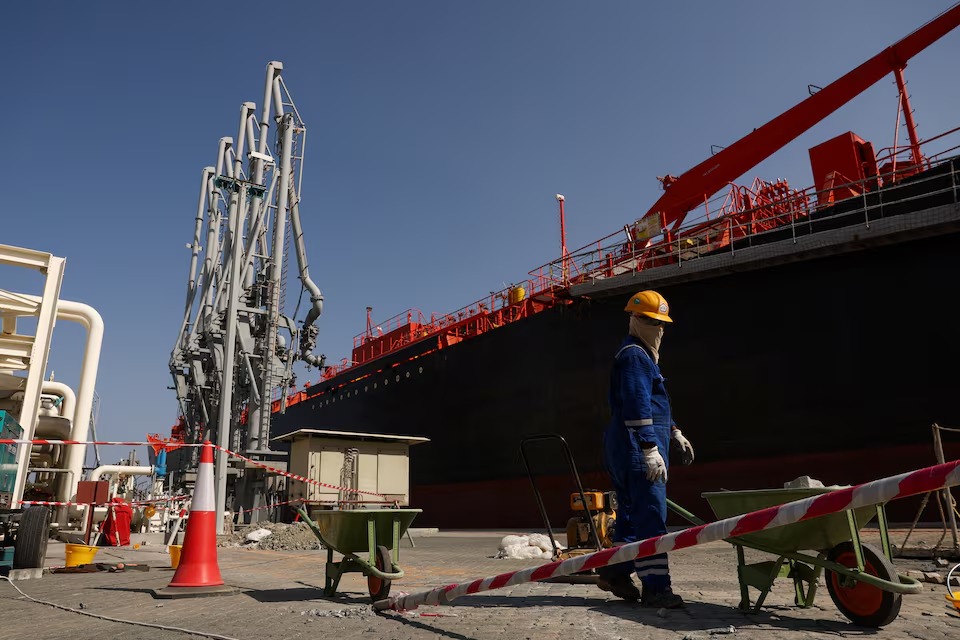
The United Arab Emirates is accelerating efforts to protect its energy exports and trade routes as the conflict involving Iran continues to create uncertainty across the Gulf region.
Senior UAE presidential adviser Anwar Gargash said the country is investing in alternative transport corridors and export infrastructure to ensure its economy is not disrupted by regional instability. His remarks came during a policy forum in Abu Dhabi, where officials discussed the economic and security challenges created by the ongoing conflict.
The war has had a major impact on Gulf nations, particularly after Iranian missile strikes and attacks on oil tankers operating near key shipping lanes. Those incidents have raised concerns about the security of energy supplies and international trade routes that are vital to the global economy.
Gargash said the UAE is determined to ensure that its energy exports and commercial activities remain secure despite growing regional tensions. According to him, the country is expanding infrastructure projects designed to reduce dependence on vulnerable maritime routes.
These efforts include increasing port capacity along the UAE’s eastern coastline, developing new pipeline networks, and investing in rail connections and trade corridors. The projects are intended to create alternative pathways for exports and imports, helping the country maintain economic activity even during periods of conflict.
The strategy reflects a broader effort by Gulf states to strengthen economic resilience. Energy exports remain a key source of revenue for the UAE, making uninterrupted access to international markets a national priority.
Although Gargash acknowledged that relations between the UAE and Iran could improve in the future, he warned that rebuilding trust would take time. He said recent attacks have created deep concerns across the region and could affect relations for years to come.
The adviser also expressed concern about the lack of a unified Gulf response to regional security threats. He argued that Gulf countries share many of the same concerns but have struggled to develop a coordinated strategy to address them.
Security issues were a major focus of discussions at the forum. Officials emphasized that Gulf nations must strengthen their own capabilities while maintaining international partnerships.
Qatar’s foreign ministry spokesperson, Majed Al-Ansari, echoed similar views during the event. He said that while strategic cooperation with the United States remains important, Gulf countries should not rely entirely on outside powers for their security needs.
According to Al-Ansari, long-term stability requires stronger regional capabilities and greater self-reliance. He stressed that national and regional security structures must continue to evolve to meet changing threats.
Gargash agreed that partnerships with major allies remain valuable. However, he said recent events have highlighted the importance of developing independent capabilities. He noted that every nation naturally places its own interests first, making domestic preparedness essential.
One of the most significant issues remains the Strait of Hormuz, a critical shipping route for global energy supplies. The waterway has become a central point of tension during the conflict, with disruptions affecting international energy markets and contributing to sharp increases in oil prices.
The closure and disruption of shipping activity in the area have underscored the importance of secure maritime routes. Businesses and governments around the world continue to monitor developments because a large share of global energy exports traditionally passes through the strait.
Negotiations involving regional and international mediators have sought to address tensions surrounding the waterway. However, disagreements over navigation rights and security guarantees remain major obstacles.
Gargash said freedom of navigation must remain a basic principle of international trade. He argued that access to key maritime routes should not be subject to political pressure or regional disputes.
He also stressed that any lasting solution to the conflict must include reliable guarantees that Gulf states will be protected from future attacks. Such assurances, he said, are necessary to restore confidence and support long-term stability.
As the conflict continues with no clear resolution in sight, Gulf nations are adapting to a new security and economic reality. For the UAE, expanding alternative trade routes and strengthening export infrastructure have become central parts of a strategy aimed at protecting economic growth and ensuring energy supplies continue to reach global markets.

