


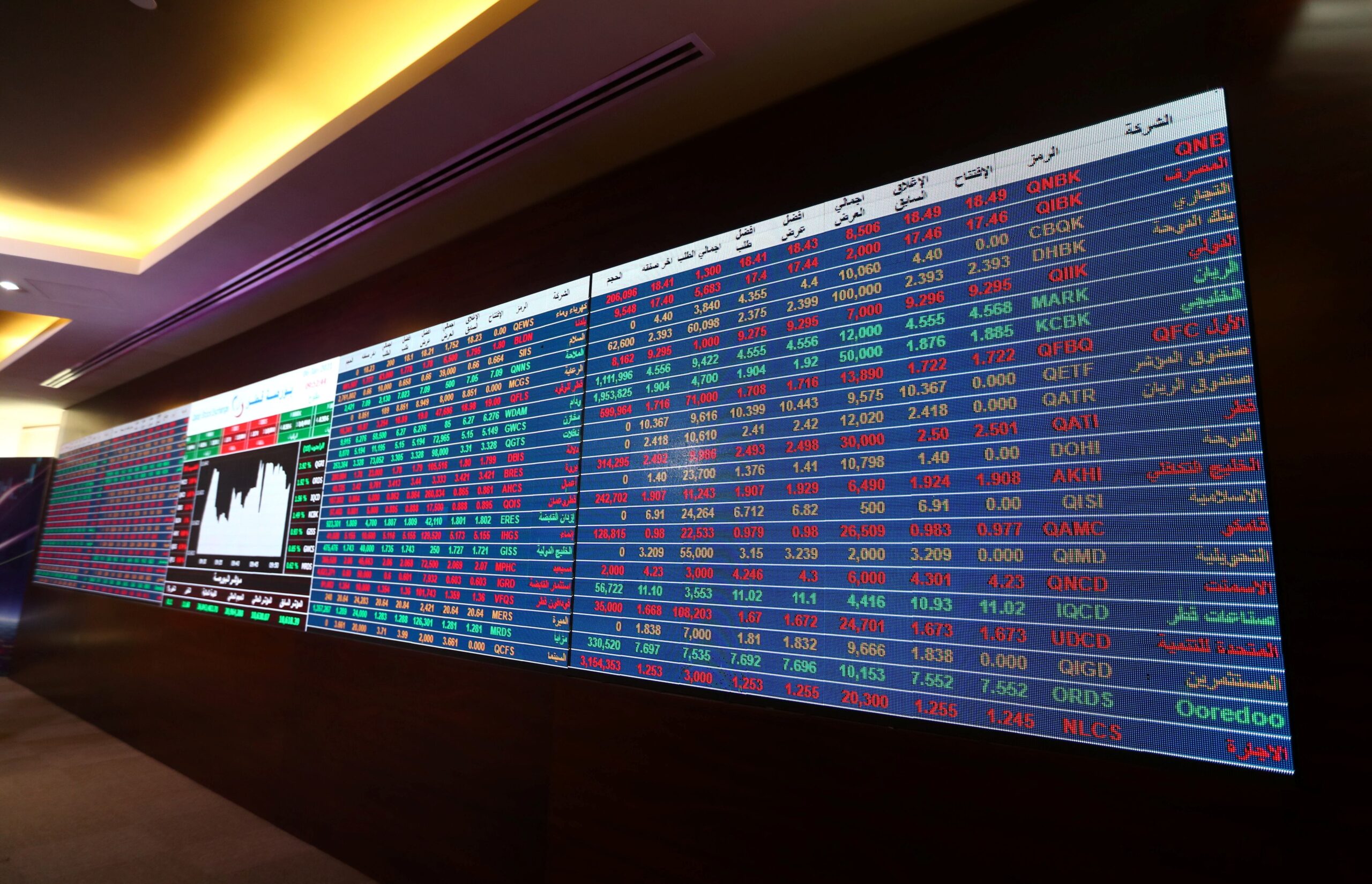
Stock markets in the United Arab Emirates ended lower on Friday as investors reacted to ongoing uncertainty surrounding negotiations between the United States and Iran.
The declines extended recent losses in both Dubai and Abu Dhabi, with concerns over regional tensions and global market risks continuing to affect investor confidence.
Dubai’s main stock index closed 0.5 percent lower, marking its fourth consecutive session of losses. Most stocks on the benchmark index finished in negative territory as investors remained cautious about geopolitical developments.
Among the biggest declines in Dubai, Emirates NBD, the emirate’s largest bank, fell 1.9 percent. Road toll operator Salik also recorded losses, ending the session down 2.7 percent.
In Abu Dhabi, the benchmark index slipped 0.3 percent. The decline marked the seventh straight trading session of losses for the market.
Weakness in basic materials and consumer-related stocks contributed to the fall. Alpha Dhabi Holding declined 1.1 percent, while Abu Dhabi Commercial Bank lost 1.3 percent during the session.
Market analysts said uncertainty surrounding diplomatic efforts between Washington and Tehran remains one of the main factors influencing investor behavior.
Investors are closely watching developments after reports indicated little progress in efforts to ease tensions between the two countries.
Concerns have also increased following reports of additional military activity in the region.
According to recent reports, the United States is expanding its military presence in the Middle East. The reported buildup has drawn attention from financial markets because of its potential impact on regional stability and global energy supplies.
Investors are particularly focused on the Strait of Hormuz, one of the world’s most important shipping routes for oil and natural gas exports.
Any disruption to shipping activity in the area could affect energy markets and increase uncertainty for businesses and investors around the world.
Market participants generally prefer stability and predictable economic conditions. As a result, geopolitical tensions often lead investors to adopt a more cautious approach.
Analysts noted that uncertainty surrounding future diplomatic developments has reduced risk appetite across regional markets.
Many investors are waiting for clearer signals regarding relations between the United States and Iran before making major investment decisions.
At the same time, comments from Iranian officials have attracted attention.
Iranian President Masoud Pezeshkian said this week that Tehran remains open to dialogue with Washington. His remarks came as Iranian officials reviewed responses related to proposals aimed at easing regional tensions.
While those comments offered some hope for future diplomatic engagement, markets remained cautious because no significant breakthrough has been announced.
Financial markets often react quickly to geopolitical developments, particularly when they involve major energy-producing regions.
The Gulf region plays a critical role in global energy supplies, making developments there especially important for investors.
The recent decline in UAE stocks reflects broader concerns about how regional tensions could affect economic growth, trade, and energy markets.
Both Abu Dhabi and Dubai have experienced periods of volatility in recent weeks as investors assess international developments and their potential economic consequences.
Despite the latest losses, analysts note that UAE markets continue to benefit from strong economic fundamentals, government investment programs, and ongoing efforts to diversify national economies beyond oil revenues.
However, short-term market movements remain closely linked to global political and economic events.
Investors are also monitoring international markets, central bank policies, and energy prices for additional signals about future market direction.
For the week, both major UAE indexes ended lower.
The Abu Dhabi benchmark recorded a weekly decline of 2.2 percent, while Dubai’s index fell 1.3 percent over the same period.
The losses highlight the challenges facing investors as uncertainty surrounding regional security and international diplomacy continues.
Looking ahead, market participants are expected to remain focused on developments involving the United States and Iran, as well as any changes in military activity or diplomatic negotiations.
The UAE Stock Market Decline reflects the cautious mood currently shaping regional financial markets. Until greater clarity emerges on geopolitical issues, investors are likely to continue watching developments closely and adjusting their positions accordingly.

