


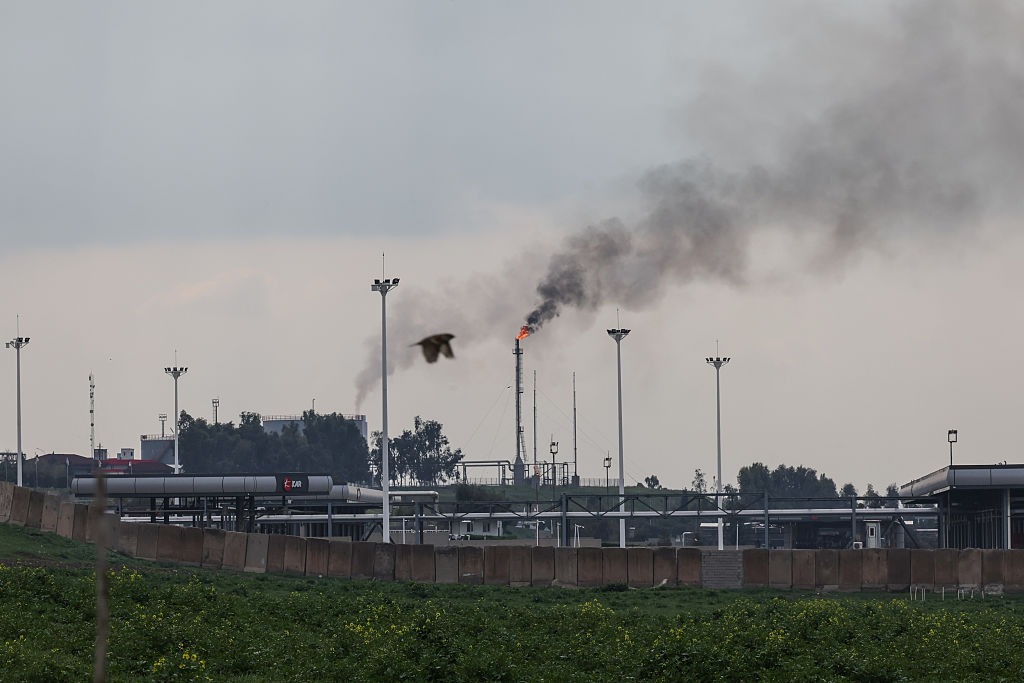
Iraq faces an intensifying economic crunch as disruptions along major maritime routes severely choke its primary source of national revenue. With crude shipments dropping to roughly half of their normal 3.4 million barrels per day, the government is struggling to meet basic budget demands. In response, Baghdad has turned to dynamic partnerships with energy operators in the United Arab Emirates to keep vital supply lines moving.
The Abu Dhabi National Oil Company has emerged as an indispensable logistical partner for Iraq. Ali Nizar, director general of the State Oil Marketing Organization in Iraq, confirmed that Iraqi crude is being sold directly to the Emirates-owned energy giant.
To move crude out of the Persian Gulf, transport operators rely on dark transits. During these journeys, ships temporarily turn off tracking systems to reduce risk while passing through contested maritime zones. Once outside narrow shipping lanes, crew members transfer the crude onto larger foreign tankers bound primarily for Asian markets.
However, dark transits carry serious operational risks. Recent attacks on energy vessels in regional waters demonstrate that high-risk shuttle missions remain exposed to security threats. Officials in the UAE condemned recent drone and missile strikes targeting commercial carriers, emphasizing that high sea risks complicate relief efforts. Despite these ongoing dangers, the shuttle system offers Iraq a crucial path to keep exports flowing.
Iraq relies on southern energy fields for roughly 90 percent of its total crude production. Before recent maritime disruptions, about 94 percent of national crude exports exited via southern sea channels. The country lacks the internal pipeline network required to divert huge quantities of southern crude toward northern land routes.
Alternative supply routes cannot offset the massive loss of sea transport. The northern pipeline connecting Iraq to the Turkish port of Ceyhan carries less than 200,000 barrels per day. Overland trucking operations running to Syria and Jordan move only minor volumes. Consequently, overland routes cannot match the heavy volume carried by ocean tankers.
Diplomatic talks between Baghdad and neighboring nations aim to establish safer sea corridors. Earlier assurances suggested non-targeted status for Iraqi vessels, but maritime movement remains low. Iraq lacks a large state-owned tanker fleet and depends heavily on foreign commercial vessels. Foreign ship owners remain hesitant to enter high-risk waters without clear guarantees. Officials caution that any potential routing agreement could involve political trade-offs or complex commercial concessions.
The drop in energy sales has brought immediate financial pressure to Baghdad. Government spokesman Haider al-Aboudi acknowledged that without steady crude revenues, the administration faces severe financial hardship. National receipts dropped to roughly $2 billion monthly during May and June. That total falls far short of the $6 billion needed each month to pay public employees, pensions, and welfare programs.
More than 10 million citizens—over one-quarter of the national population—receive direct state payments. Countless households depend entirely on those government checks for daily needs.
Public sector employees across the nation now face persistent payment delays. While some workers received partial salary installments, thousands remain unpaid. The financial shortfall has already sparked public discontent. Ministry of Electricity staff and university workers across six key regions have held rallies to protest delayed payments. Authorities worry that prolonged funding gaps could trigger wider demonstrations, adding political instability to an already delicate economic crisis.

