


Abu Dhabi Ship Building has signed a major defence contract worth €320 million (about Dh1.3 billion) with Italy’s Leonardo. The deal will provide advanced naval combat systems for Kuwait’s new missile boat programme. It marks another step in growing defence ties between the UAE and Europe.
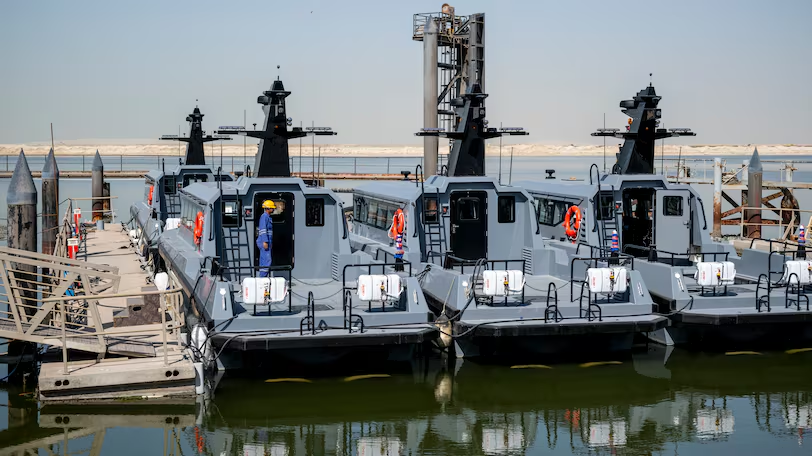
The agreement is between Leonardo and Abu Dhabi Ship Building, a key unit of the UAE defence group Edge. The systems will be used in the Falaj 3 configuration for Kuwait’s Al Dorra missile boat programme. The project comes at a time of rising tensions in the Gulf region and wider Middle East.
Leonardo confirmed the contract in a statement on Wednesday. Edge also confirmed the deal in comments shared with The National. The company said the agreement builds on a long partnership between the two firms. It added that more than 25 naval units have already been delivered through earlier cooperation.
The deal strengthens Abu Dhabi’s position in the global naval defence market. It also highlights the UAE’s push to expand its high-tech defence manufacturing sector. Edge Group, founded in 2019, has quickly grown into one of the region’s largest defence technology firms. It now includes more than 35 companies working in weapons systems, cyber defence, and electronic warfare.
Edge has also played a major role in strengthening the UAE’s defensive capabilities in recent years. During past missile and drone attacks targeting key infrastructure, systems developed by Edge were used to defend Emirati territory. The company has said that more than 85 percent of incoming drones were neutralised using locally built jamming technologies.
Hamad Al Marar, managing director and chief executive of Edge, recently highlighted the importance of domestic defence production. He said systems developed in the UAE were deployed quickly and effectively during critical moments. He also stressed that the group’s rapid response capability shows the strength of local manufacturing.
The new Kuwait naval programme builds on earlier large-scale defence agreements. Last year, Edge signed a Dh9 billion contract with Kuwait’s Ministry of Defence. That agreement covers the supply of Falaj 3-class 62-metre missile boats. It was described as the largest naval ship export deal in the region.
Abu Dhabi Ship Building is responsible for constructing these advanced naval vessels. The company works closely with Edge to deliver military and civilian shipbuilding projects. Its growing export base shows increasing demand for UAE-built defence platforms across international markets.
Global defence spending continues to rise sharply. According to the Stockholm International Peace Research Institute, worldwide military expenditure reached nearly $3 trillion in 2025. This represents a 2.9 percent increase compared with 2024. The United States, China, and Russia together account for more than half of global spending.
This global trend is driving demand for advanced defence systems and naval technology. Countries in the Gulf region are investing heavily in modernising their naval fleets. This includes missile boats, surveillance systems, and electronic warfare tools.
Abu Dhabi Ship Building is also expanding its business targets. The company reported revenue of Dh1.4 billion last year. It aims to more than double this figure to Dh3 billion within the next two to three years. Chief executive David Massey shared these goals in an earlier interview.
At present, around 70 percent of the company’s revenue comes from export contracts. The remaining 30 percent is generated from work with the UAE Navy. The company also contributes around 10 percent to the total revenue of Edge Group.
Industry experts say partnerships like the one with Leonardo reflect a long-term strategy. The UAE is positioning itself as a major hub for advanced defence manufacturing. The focus is on exports, technology transfer, and high-value engineering.
The latest deal reinforces Abu Dhabi’s role in global naval defence supply chains. It also shows continued cooperation between Europe and the Gulf in sensitive military technology. With ongoing regional tensions, defence partnerships are expected to remain a key area of growth for both sides.

