


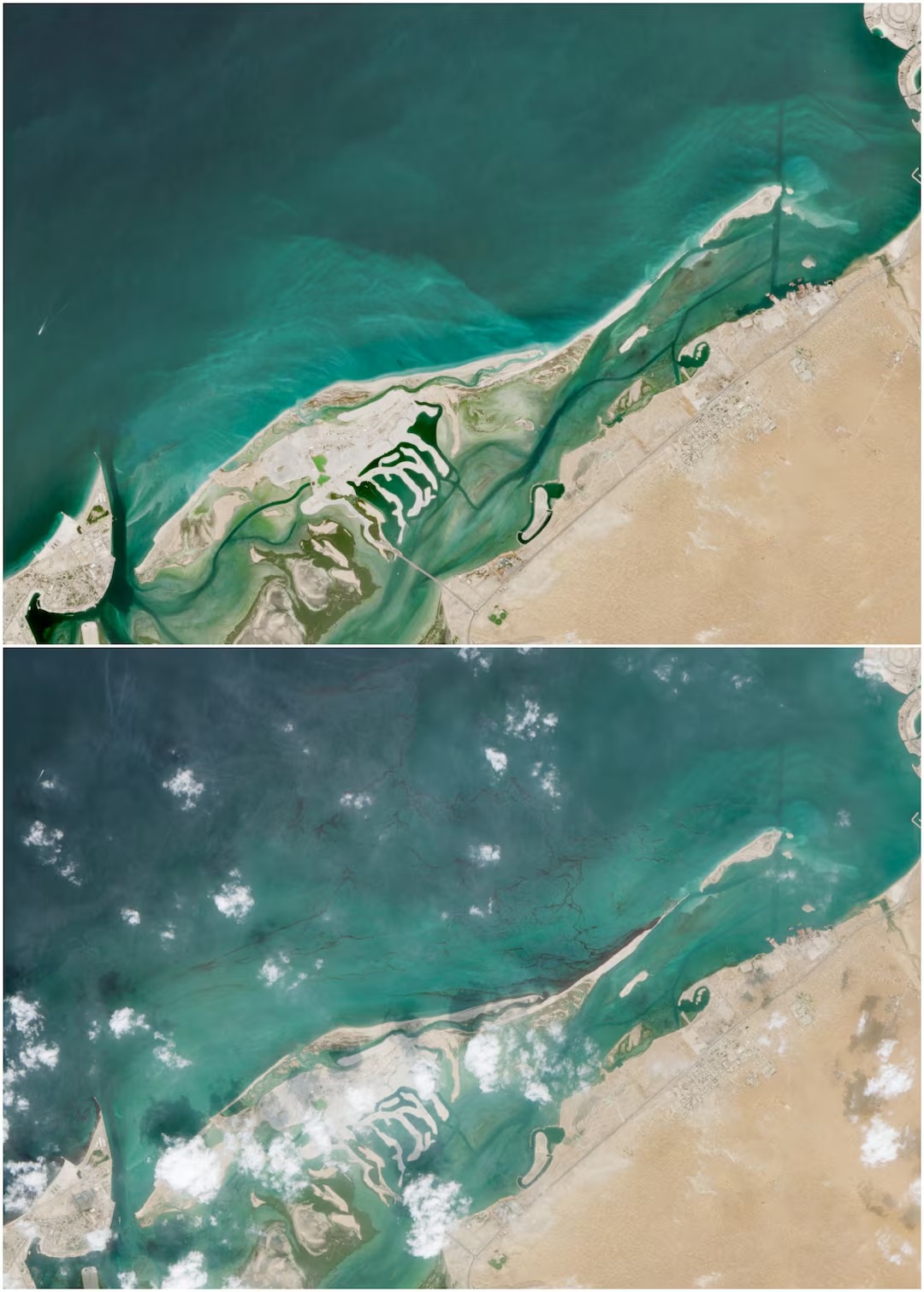
An oil spill off the coast of the United Arab Emirates has grown in size, raising fears about damage to marine life and coastal areas. Satellite images from the European Union show oil spreading across the sea and moving closer to the northern emirate of Umm Al Quwain.
The images were captured on October 24 by the Copernicus satellite observation network. They show dark layers of oil across the water and near parts of the coastline. The spill has led local authorities to close beaches and restrict access to coastal areas.
The UAE said on Friday that teams were working to contain the leaking oil. The Ministry of Climate Change and Environment has also started an environmental assessment to understand the scale of the damage.
Officials have not publicly named the tanker linked to the spill. They have also not confirmed what caused the leak. However, experts told Reuters that the oil appears to be coming from a damaged tanker called Gem No. 2.
Shipping sources said the vessel was hit by an unidentified projectile last month. The attack caused a fire, which was later put out. The latest satellite images appear to show a large oil spill near the tanker.
The incident comes during a period of growing danger for ships in Gulf waters. Since the start of the US-Israeli war with Iran, attacks on commercial vessels have raised risks for shipping companies and crews. The attacks have also increased concern about pollution and other environmental damage.
October has been the worst month for attacks on commercial shipping in the Strait of Hormuz and nearby waters, according to data compiled by the Washington Institute for Near East Policy. The growing number of incidents has added pressure on a region that plays a key role in global energy trade.
Oil spills can cause lasting harm to coastal environments. The impact depends on the amount of oil released, the type of oil, sea conditions and how quickly response teams can contain it. Oil can spread over large areas and reach beaches, wetlands and shallow waters.
Authorities in several northern emirates have taken steps to limit public access to the coast. Umm Al Quwain ordered the temporary closure of all beaches and coastal areas around the city. Officials said the restrictions would help protect people while teams assess the spill and track the movement of the oil.
Neighbouring Sharjah also closed access to Al Hamriyah Beach as a precaution. The measures aim to keep people away from areas that may be affected by the oil.
Ras Al Khaimah, known for its beaches and luxury resorts, announced on Saturday that all beaches in the emirate would remain closed until further notice. The closures could affect residents, visitors and businesses that depend on coastal tourism.
Nidal Hilal, a professor of engineering and director of New York University Abu Dhabi’s Water Research Center, said the spill was a serious environmental concern. He said closing beaches was a sensible step while officials worked to understand how far the oil had spread and where it might move next.
The satellite images provide important information because oil slicks can be difficult to track across open water. By studying images from different dates, experts can compare the size and location of the spill. This can help response teams decide where to focus their work.
The UAE’s coastal waters support a wide range of marine life. The International Union for Conservation of Nature says Gulf waters contain more than 500 species of fish, along with marine turtles, dolphins and other wildlife.
Oil pollution can threaten these animals and the habitats they depend on. It may coat birds and marine animals, affect feeding areas and damage plants and other organisms near the shore. Coral reefs and shallow coastal habitats may also face risks if oil reaches them.
The full environmental impact of the spill remains unclear. Authorities are still assessing the situation, and officials have not released a final estimate of the amount of oil involved.
The next steps will depend on the movement of the oil, weather and sea conditions, and the success of containment efforts. Teams will need to monitor the affected waters and coastline as the response continues.
For now, beach closures remain an important precaution across the northern emirates. The widening spill has added to concerns about the environmental cost of attacks on commercial ships during the regional conflict.
The incident highlights how damage to a single vessel can create risks far beyond the ship itself. As officials work to contain the oil, residents, tourists and environmental experts will be watching closely for signs of further spread and damage to marine life.

