


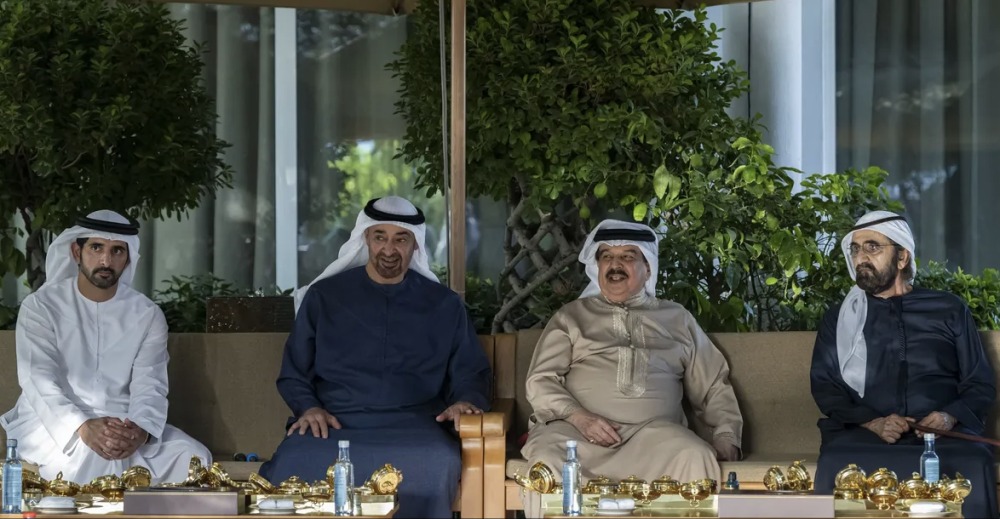
The strong partnership between the United Arab Emirates and Bahrain was highlighted once again as UAE President Sheikh Mohamed bin Zayed Al Nahyan welcomed Bahrain’s King Hamad bin Isa Al Khalifa to Abu Dhabi for high-level talks focused on cooperation, development, and regional stability.
The meeting brought together some of the Gulf region’s most senior leaders, including UAE Vice President, Prime Minister, and Ruler of Dubai Sheikh Mohammed bin Rashid Al Maktoum. The gathering reflected the close relationship that has long linked the two neighboring nations and their leaderships.
During the discussions, the leaders exchanged warm greetings and reaffirmed the deep historical ties between the UAE and Bahrain. They emphasized the importance of continuing cooperation in ways that support shared interests and contribute to economic growth, development, and prosperity for both countries.
Officials said the talks focused on strengthening collaboration across a range of sectors. The leaders reviewed opportunities to expand partnerships that align with national development goals and enhance cooperation in areas of mutual benefit.
The meeting also provided an opportunity to discuss regional and international developments. Leaders exchanged views on issues affecting the Gulf region and explored ways to support stability, security, and cooperation amid changing global conditions.
Observers note that relations between the UAE and Bahrain have remained strong for decades, supported by close political coordination, economic ties, and shared strategic interests. Both countries are members of the Gulf Cooperation Council and frequently work together on regional initiatives aimed at promoting development and security.
The discussions in Abu Dhabi underscored the importance both governments place on maintaining close communication and coordination. Analysts say regular meetings between Gulf leaders help strengthen partnerships and support collective efforts to address regional challenges.
A number of senior UAE officials attended the meeting, highlighting its significance. Among those present were Sheikh Hamdan bin Mohammed bin Rashid Al Maktoum, Crown Prince of Dubai and Minister of Defense, and Sheikh Ahmed bin Mohammed bin Rashid Al Maktoum, Second Deputy Ruler of Dubai.
Other attendees included Sheikh Dhiyab bin Mohamed bin Zayed Al Nahyan, Deputy Head of the Presidential Court for Developmental Affairs and Families of Martyrs, and Sheikh Hamdan bin Mohamed bin Zayed Al Nahyan, Deputy Head of the Presidential Court for Special Affairs.
The meeting was also attended by Sheikh Ahmed bin Saeed Al Maktoum, Chairman of the Dubai Civil Aviation Authority and Chief Executive of Emirates Group, along with Sheikh Mohamed bin Hamad bin Tahnoun Al Nahyan, Advisor to the UAE President. Several ministers and senior government officials were also present.
Representing Bahrain, Sheikh Nasser bin Hamad Al Khalifa attended the discussions. He serves as National Security Advisor, Secretary-General of the Supreme Defense Council, and Commander of the Royal Guard. His participation highlighted the importance Bahrain places on strategic cooperation with the UAE.
Political analysts view the meeting as another example of the close alignment between the two countries on regional priorities. Both nations have consistently emphasized the value of cooperation, dialogue, and coordinated action in addressing regional and international issues.
Economic cooperation continues to be an important pillar of the relationship. Trade, investment, transportation, tourism, and infrastructure development remain areas where both countries seek to expand collaboration. Business ties between the UAE and Bahrain have grown steadily over the years, supported by strong government-to-government relations.
The meeting also reflected a shared commitment to advancing development goals while supporting peace and stability throughout the region. Gulf leaders have increasingly emphasized cooperation as a key tool for addressing economic challenges and promoting sustainable growth.
As regional and global conditions continue to evolve, both countries appear committed to maintaining their close partnership and strengthening coordination on issues of common interest.
The Abu Dhabi meeting reaffirmed the enduring relationship between the UAE and Bahrain, highlighting a shared vision focused on prosperity, stability, and long-term cooperation. The discussions demonstrated the continued importance of bilateral ties and the commitment of both leaderships to deepening collaboration across multiple sectors in the years ahead.

