


A senior United Arab Emirates official has warned that Gulf countries must prepare for a long period of uncertainty if the United States and Iran fail to reach a political agreement. The warning comes as tensions remain high and fears of renewed military action continue across the Middle East.
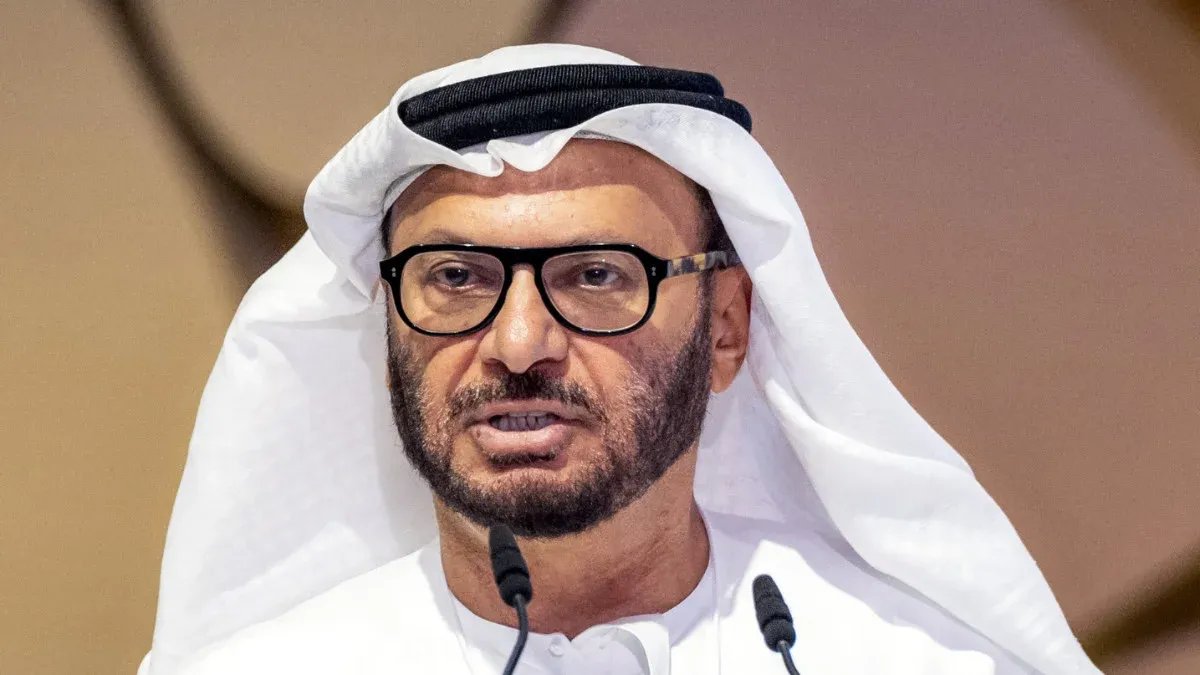
Anwar Gargash, diplomatic adviser to UAE President Mohamed bin Zayed, said the region could face a prolonged period without a clear end to the conflict or a stable political order.
“We should… prepare for a long period of uncertainty in which neither a decisive resolution nor stable regional order can be taken for granted,” Gargash said on Monday at a forum in Abu Dhabi.
His comments reflect growing concern among Gulf governments about the future of the conflict. Even if another round of fighting is avoided, the region may continue to face security risks, trade disruption and political pressure.
The warning came as regional leaders watched for signs of whether US President Donald Trump would order fresh attacks on Iran. Expectations of another military operation had increased before the US midterm elections on November 3.
The Democrats won a major election victory, which Trump and Vice President JD Vance linked to public opposition to the US-Israeli war against Iran. The result added pressure on the administration as it considers its next steps.
Trump told CNN on Monday that a new attack was “highly unlikely” while negotiations were taking place. However, concerns remain because previous military operations against Iran also took place during diplomatic talks.
The United States and Israel launched attacks against Iran in February while negotiations were under way. A separate US strike on Iranian nuclear facilities in June 2025 also came during a period of talks.
The military situation remains serious. The United States has three aircraft carrier strike groups in the Middle East. Trump has also said that American forces have identified civilian infrastructure that could be targeted in a future operation.
He referred to 38 bridges and said they could be destroyed within a short period. Such statements have added to concerns about the possible scale of another conflict.
For Gulf countries, the risk is not limited to a new military campaign. The region is already dealing with a difficult security and economic situation. The United States is maintaining a blockade of Iranian shipping, while Iran has continued attacks on vessels in the Strait of Hormuz.
Saudi Arabia is also facing repeated attacks from the Houthis in Yemen, who are aligned with Iran. These developments have increased the risks for energy facilities, transport routes and other key infrastructure.
A prolonged situation without either war or peace could create serious problems for Gulf economies. Governments in the region want to attract foreign investment, expand trade and restore energy exports to levels seen before the conflict.
The UAE has particular reasons to be concerned. Its economy depends not only on oil and gas but also on real estate, tourism, shipping and international business. Continued instability could affect investor confidence and make companies more cautious about operating in the country.
The UAE and other Gulf states that host US military facilities were targeted by Iran after the February 28 attack. The UAE faced more than 3,000 missiles and drone attacks, according to the figures cited in reports about the conflict.
Reuters has reported that Gulf governments played down the scale of damage caused by Iranian strikes. Attacks on the Port of Fujairah were especially concerning because they targeted infrastructure used to move crude oil and refined petroleum products from storage terminals to ships.
The UAE had initially opposed the US and Israeli attack on Iran but later adopted a stronger position in support of military pressure. It also carried out air strikes against Iran, according to the source report.
Abu Dhabi reportedly sought to discourage Pakistan from mediating between Washington and Tehran by withdrawing a $3.5 billion loan. Pakistan later remained involved in diplomatic efforts to reduce tensions.
Despite its firm position during the conflict, the UAE appeared to move towards a more conciliatory approach in September. Gargash called for a new regional mindset and supported negotiations that would include both Iran and Arab countries.
The UAE has also worked to reduce its dependence on the Strait of Hormuz by expanding alternative oil export routes. Pipelines allow some crude to reach ports outside the narrow waterway. However, these routes also face security risks.
Houthi attacks on Saudi Arabia’s East-West Pipeline have shown that alternative infrastructure can also be vulnerable during a regional conflict.
Gargash said the UAE would increase investment in its defensive capabilities and maintain credible deterrence. He also called for stronger international security partnerships.
His warning suggests that Gulf governments are preparing for a future in which diplomatic progress may remain slow and security threats may continue. For the UAE and its neighbours, restoring stability will be important not only for regional peace but also for investment, trade and energy exports.

