


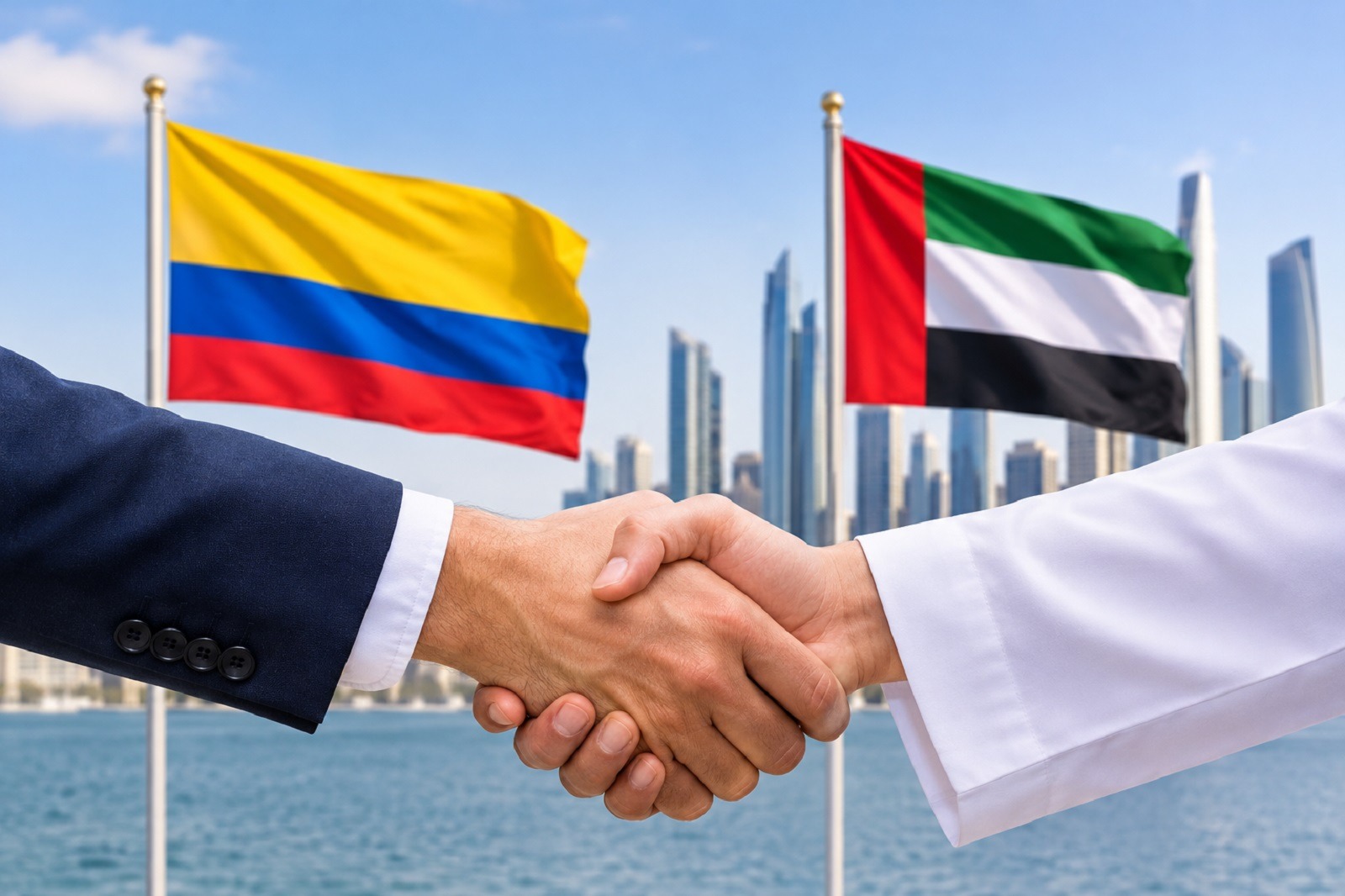
Colombia has taken a step toward stronger trade ties with the United Arab Emirates (UAE). A bill to put their trade agreement into effect has passed its first debate in the Colombian Senate. The move could open new markets for Colombian goods and bring more foreign investment into the country.
The bill was approved by the Senate’s Second Committee. It aims to help Colombian firms reach buyers in one of the Middle East’s wealthiest markets. It also seeks to create new business links and give local firms more chances to grow.
Under the deal, 85% of Colombian products would enter the UAE market without import duties as soon as the agreement takes effect. Another 13% would see duties fall over five years. These terms could help Colombian firms compete with suppliers from other nations.
The deal still needs to pass the remaining stages in Congress. It cannot become fully active until lawmakers give it final approval. Even so, the first vote marks progress in Colombia’s effort to build trade ties beyond its usual markets.
The tariff cuts are a key part of the plan. Lower costs could make Colombian goods more attractive to UAE buyers. This may help firms that have strong products but face high costs when selling abroad.
The goods set to benefit from a gradual cut in duties include cookies, sweets, medicines, ceramics, machines and home appliances. The five-year period would give firms time to adjust to the new trade terms and build links with buyers.
Farm exports could see some of the biggest gains. Colombia hopes to sell more coffee, fresh fruit and vegetables in the UAE. Both green and roasted coffee, along with goods made from coffee, are among the products with export potential.
Mangoes, mangosteens and Hass avocados could also gain from better market access. Senate President Honorio Henriquez has named these goods as products that could benefit from the deal.
The UAE imports about US$19 billion in farm goods and food each year, according to Henriquez. This gives Colombian growers a large market to target. The country hopes to win a bigger share of this demand with goods known for their quality.
Small and medium-sized firms could also gain new buyers. More export markets may help them raise sales and reduce the risk of relying on a small number of customers. Better access could also help farmers find new ways to sell their crops and cut losses.
However, lower tariffs alone will not ensure success. Exporters must meet UAE health and safety rules. They will also need strong transport links, steady supplies and good trade partners. These steps will be key to turning the deal into real gains for local firms.
The agreement also aims to bring more UAE investment into Colombia. The sectors in focus include roads, energy, tourism, technology and farming. UAE funds could help pay for new projects, improve local output and support firms that need more capital to grow.
For Colombia, this could mean a wider range of foreign investors. It could also lead to new links between firms in both nations. Such ties may bring new skills, tools and technology to local firms.
The deal also seeks to help small and medium-sized businesses join global supply chains. Lower trade costs and new business links could make it easier for them to work with firms abroad. Still, they will need enough money, staff and tools to meet the needs of global buyers.
Trade in services is another part of the plan. The deal aims to create more scope for tourism, digital trade and professional services. This could help firms that do not rely on the sale of physical goods.
The focus on services may also widen the links between Colombia and the UAE. Tourism firms, tech companies and service providers could find new clients and partners in both markets.
The agreement also refers to green growth and the need to protect the environment. Both sides will face the task of turning these aims into clear steps. New trade and investment projects will need to meet the right environmental rules.
Colombia’s push for the deal forms part of a wider plan to spread its trade links across more regions. Stronger ties with the UAE could give local firms access to new buyers and help draw more capital into key sectors.
The first Senate vote is an important step, but more work remains. The bill must pass further debates and win approval from the full Congress before the trade deal can take effect. Until then, exporters and investors will have to wait for the final rules.
If approved, the deal could give Colombia a wider role in trade with the Middle East. Its impact will depend on how well local firms use the new market access and meet the needs of UAE buyers.

