


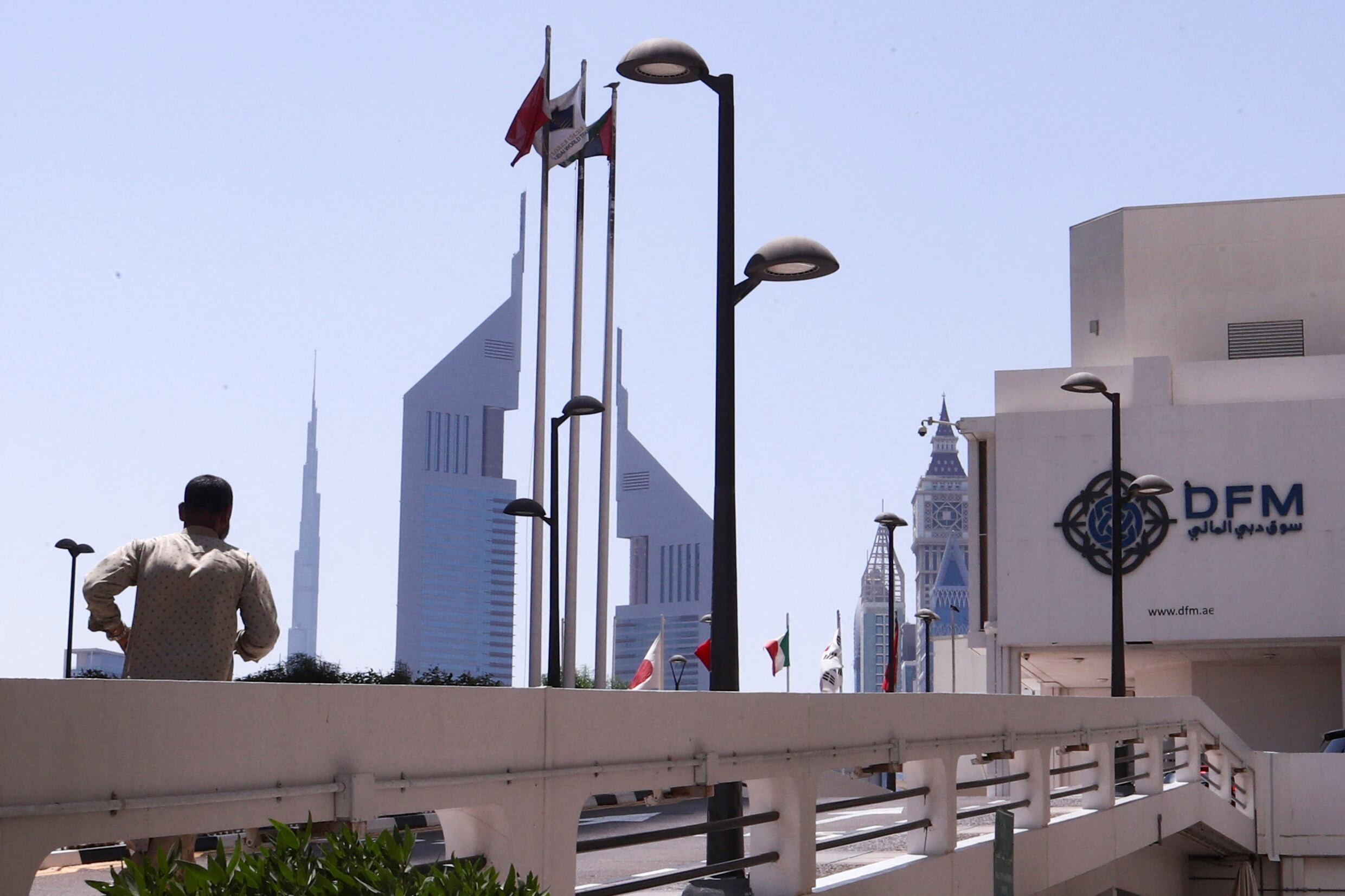
Stock markets in the United Arab Emirates ended the week on a mixed note as investors reacted to growing tensions between the United States and Iran, along with concerns over shipping activity in the Strait of Hormuz.
Investor sentiment weakened after U.S. officials signaled plans for a new round of tough sanctions against Iran. Market participants also monitored developments in the Strait of Hormuz, one of the world’s most important energy and shipping routes, where lower vessel traffic has raised concerns about regional trade and economic stability.
The uncertainty surrounding regional security and global energy supplies contributed to cautious trading across Gulf financial markets. Analysts said geopolitical risks remained a key factor influencing investor decisions throughout the trading session.
In Abu Dhabi, the benchmark index finished lower as declines in several major stocks weighed on overall market performance. Investor caution increased amid fears that an escalation in regional tensions could affect economic activity and business confidence.
Dubai’s main index, however, managed to close higher after recovering from recent losses. Gains in selected banking and telecommunications stocks helped support the market despite broader concerns about geopolitical developments.
The latest market reaction came after U.S. Treasury Secretary Scott Bessent announced that Washington intends to impose what he described as the toughest sanctions yet against Iran. U.S. officials have argued that stronger economic measures are needed to increase pressure on Tehran, while China has maintained that sanctions alone will not resolve the dispute.
At the same time, investors continued to follow developments involving the United Arab Emirates and Iran. Recent actions by the UAE to suspend trade and financial transactions with Iran have added another layer of uncertainty to regional markets and business activity.
The Strait of Hormuz remains a major focus for traders and policymakers. The waterway handles a significant share of global energy shipments, and any disruption can affect oil prices, shipping costs, and investor confidence. Reports of reduced vessel traffic through the route have heightened concerns about potential impacts on international trade.
Oil prices also remained sensitive to developments in the region. Market participants have been closely watching supply risks linked to the ongoing tensions. Higher energy prices can support some Gulf economies, but uncertainty surrounding transportation and trade routes can create additional challenges for investors.
Financial experts said regional markets are likely to remain influenced by political and economic developments in the coming weeks. Investors are expected to watch for any new sanctions announcements, diplomatic efforts, and changes in shipping activity through the Strait of Hormuz.
Both the Dubai and Abu Dhabi markets recorded weekly declines, reflecting the cautious mood that has spread across regional exchanges. Market participants continue to balance strong economic fundamentals against growing geopolitical risks.
The UAE Stocks Iran Tensions story highlights how closely regional financial markets are linked to developments in global politics and energy security. As uncertainty persists, investors are expected to remain focused on sanctions policy, regional stability, and the future of trade flows through one of the world’s most critical maritime corridors.

