


Canada and the United Arab Emirates have signed a major trade agreement and started talks on a possible extradition treaty. The deal aims to boost trade, strengthen military ties and improve business links between the two countries. However, the plans have also raised concerns about human rights and the UAE’s legal system.
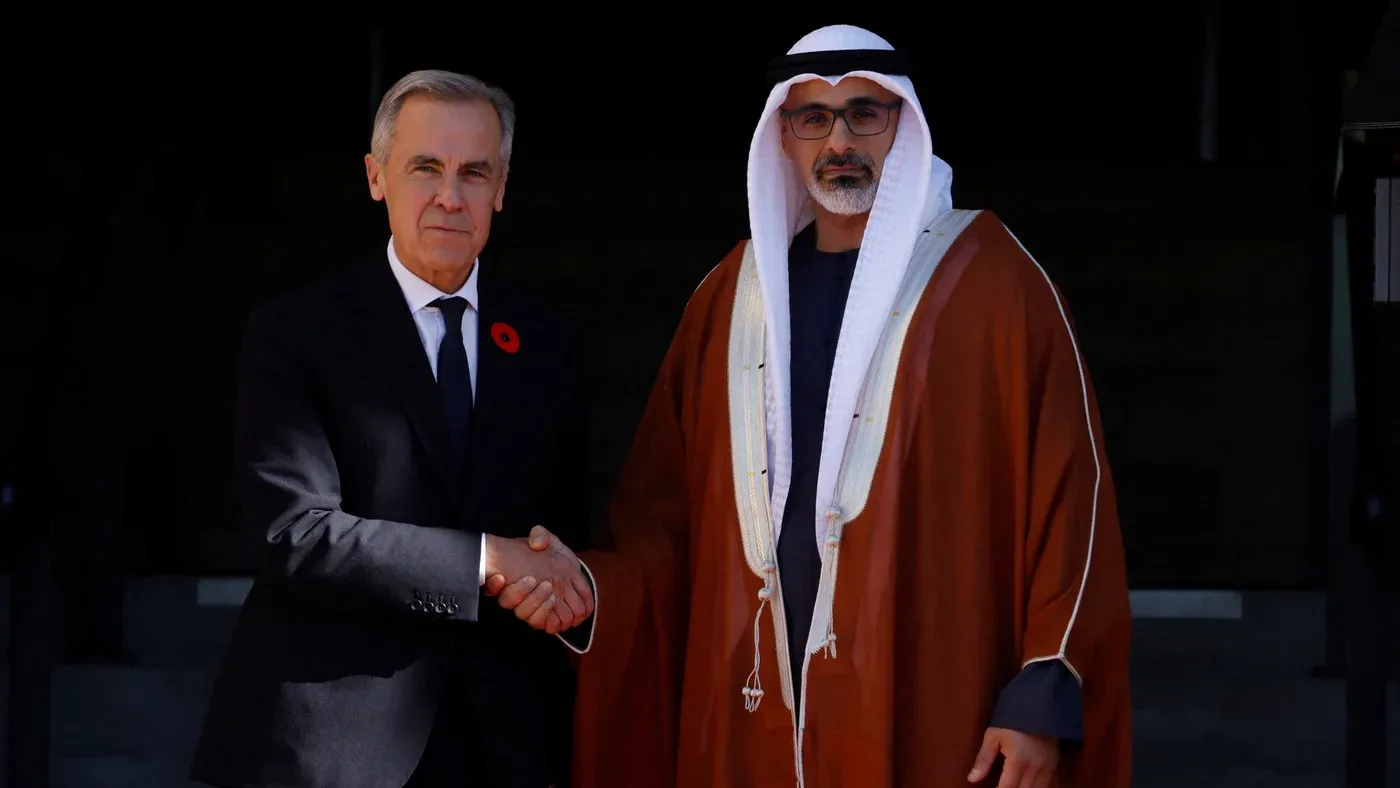
The announcement came on Tuesday after Khaled bin Mohamed bin Zayed Al Nahyan made the first visit by an Emirati crown prince to Canada’s capital, Ottawa. He spent two days meeting Canadian Prime Minister Mark Carney. The visit marked a new step in relations between the two nations.
One of the main results was the Canada-UAE Comprehensive Economic Partnership Agreement, known as Cepa. The two sides negotiated the deal in just 47 days, setting a record for both countries.
Carney said the agreement would reduce or remove tariffs on more than 99% of Canadian exports to the UAE from next year. The move is expected to give Canadian companies better access to the Gulf market and create new chances for exporters.
Canadian farmers could benefit from lower trade barriers on products such as pulses and canola. Manufacturers of industrial machinery and power generation equipment may also gain from improved access. The agreement could also support Canada’s aerospace industry and other technology-focused businesses.
Carney said the deal would help Canadian producers reach new customers and expand their presence in a growing market. The UAE is seeking to strengthen its role as a major business and investment hub, making it an important partner for Canadian companies looking to expand abroad.
Canada’s Minister of International Trade, Maninder Sidhu, said the agreement could nearly double trade between the two countries over the next decade. Two-way trade currently stands at about $2.4 billion and could rise to almost $5 billion.
Sidhu also pointed to the size of the UAE economy, which is valued at around $500 billion. Better access to this market could help Canadian businesses increase sales, attract investment and build stronger commercial links across the Middle East.
Investment was another key issue during the visit. A year ago, the UAE pledged to invest $50 billion in Canadian energy and development projects after Carney visited Abu Dhabi. The proposed investment includes a focus on energy and projects in Canada’s Arctic region.
Carney said this week’s talks had delivered significant progress on the investment pledge. However, he did not provide details about the projects or explain when the funds might be committed.
The agreement has also drawn criticism. Stuart Trew, director of the Trade and Investment Research Project at the Canadian Centre for Policy Alternatives, argued that the UAE’s promised investment may have played a major role in Ottawa’s decisions.
Trew questioned whether Canada was making too many concessions in its effort to attract Emirati funds. He raised particular concerns about the proposed extradition treaty and the military cooperation agreement.
Canada and the UAE have begun discussions on an extradition treaty that could allow the UAE to request the return of people accused of criminal conduct. Any such arrangement could have major legal and diplomatic effects, especially when cases involve political dissent or concerns about fair treatment.
Critics argue that the UAE has strict limits on political expression and uses extensive surveillance. Rights groups have also raised concerns about the country’s treatment of critics and the protection of civil and political rights.
The visit also produced a memorandum of understanding to create a Joint Military Committee. The planned body will support cooperation in military education, training, joint exercises, cybersecurity and information sharing.
The two governments have not provided a full timetable for the committee’s work. Still, the agreement signals a wider effort to build security ties alongside stronger economic relations.
Questions have also been raised about the UAE’s role in conflicts abroad, including the civil war in Sudan. Rights groups and media reports have described allegations that the UAE provides financial support to Sudan’s Rapid Support Forces, a paramilitary group accused of serious abuses, including genocide.
The UAE has denied involvement in supporting the group. The allegations remain a sensitive issue in discussions about its foreign policy and international partnerships.
Democracy for the Arab World Now, a rights organization founded by the late journalist Jamal Khashoggi, has criticized political freedoms in the UAE. The group says citizens lack enforceable civil and political rights and face little tolerance for critical political views.
The new agreements therefore bring both opportunities and challenges for Canada. Lower tariffs and greater investment could support exporters, create business opportunities and deepen economic ties. Military cooperation may also open new channels for security work.
However, the proposed extradition treaty and broader partnership are likely to face scrutiny over human rights and legal protections. As negotiations continue, Ottawa will need to balance its economic goals with concerns about civil liberties and accountability.

