


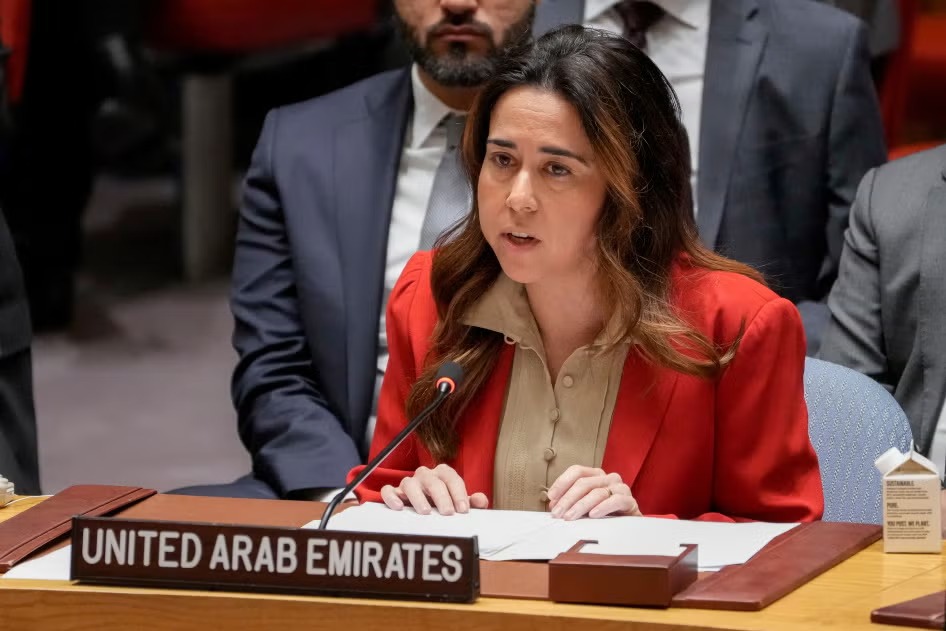
Lana Nusseibeh, a senior United Arab Emirates diplomat nominated to become the next United Nations secretary-general, is facing criticism over her record on human rights. Human Rights Watch says she has repeatedly denied allegations of UAE involvement in abuses in Sudan and Yemen. The group says her public statements raise questions about her commitment to accountability.
The UAE formally nominated Nusseibeh for the top UN position on October 21, 2026. Her nomination has drawn attention to her long career in the country’s foreign affairs service and her role in defending the government’s policies.
Human Rights Watch said Nusseibeh had repeatedly rejected evidence linking the UAE to support for Sudan’s Rapid Support Forces, known as the RSF. The group also accused her of dismissing reports about abuses linked to the UAE’s military role in Yemen.
Bruno Stagno Ugarte, chief advocacy officer at Human Rights Watch, said her statements had diverted attention from allegations against the UAE. He argued that her responses to UN findings had weakened efforts to establish responsibility for abuses.
The RSF is fighting Sudan’s armed forces in a conflict that has caused widespread civilian suffering. The paramilitary group has been accused of war crimes and crimes against humanity, including ethnic cleansing in Darfur. A UN fact-finding mission also said the group’s assault on El Fasher, the capital of North Darfur, showed signs associated with genocide.
The UAE has denied providing military support to the RSF. Nusseibeh has repeated that position in public statements and interviews.
In September 2024, she wrote to The Economist that the UAE was not providing weapons or other support to the RSF or any party involved in Sudan’s conflict. Her letter followed a report by a UN Panel of Experts that described credible allegations of UAE military assistance reaching the RSF through Chad.
A UAE government letter included in the report said flights from the UAE to Chad had carried humanitarian aid for Sudanese civilians. The document was unsigned but used the letterhead of the UAE’s permanent mission to the UN in New York. Nusseibeh led that mission from 2013 until April 2024.
In April 2024, she also rejected accusations made by Sudan’s government that the UAE was providing military, logistical and political support to the RSF. Three months later, when CNN asked whether the UAE was arming the group, she again described the allegations as untrue and said the UAE was delivering humanitarian assistance during the crisis.
Further allegations emerged in 2025 and 2026. In November 2025, Nusseibeh took part in UAE lobbying efforts involving members of the European Parliament before a vote on a resolution condemning atrocities in Sudan. Reports said Emirati representatives promoted the country’s claim that it was playing a constructive role in the conflict.
The European Parliament passed the resolution without referring to the UAE’s alleged role. However, a later resolution adopted in July 2026 directly raised concerns about UAE support for the RSF and called for sanctions against an Emirati company linked to the recruitment and transfer of foreign fighters.
A Human Rights Watch report published in May 2026 examined the movement of Colombian private military contractors to Sudan. The report said the fighters appeared to have been hired by a UAE-based company and passed through UAE military bases before being deployed to support the RSF.
According to the report, some of the fighters were involved in operations around El Fasher. The city experienced massacres, widespread sexual violence and abductions for ransom during the RSF’s takeover. Human Rights Watch said the findings provided further evidence that networks linked to the UAE had helped strengthen the group’s military capacity.
A UN fact-finding mission released another report in August 2026. It found that individuals and organisations operating from or connected to the UAE had played a significant role in networks involved in recruiting, financing, transporting and deploying foreign military contractors who benefited the RSF.
Human Rights Watch has also reported that the RSF used military equipment linked to supplies originally sold for the benefit of the UAE armed forces.
On October 27, Nusseibeh faced questions about her public denials of findings by UN investigators during a dialogue with UN member states and civil society organisations. She did not directly answer a question about whether she would continue to reject findings produced by the organisation she hopes to lead. Instead, she said she had taken leave from her position as a UAE minister and directed questions about the country’s conduct to its government.
Her record in Yemen has also come under scrutiny. The UAE joined a Saudi-led military coalition in March 2015 and played a major role in operations against Houthi forces. It contributed fighter jets, naval vessels and support for local armed groups.
Human Rights Watch documented dozens of unlawful coalition airstrikes in 2016 that killed nearly 800 civilians and hit homes, markets, hospitals, schools, businesses and mosques. The group also reported the coalition’s use of cluster munitions.
Nusseibeh defended the UAE’s conduct in public statements in 2016 and 2018, saying the country took its responsibilities under international humanitarian law seriously. Human Rights Watch questioned those assurances, pointing to evidence of civilian harm and concerns about military operations near Hodeida.
In 2021, the UAE and Saudi Arabia also led efforts to end the mandate of an independent international group investigating abuses in Yemen.
Human Rights Watch says UN member states should closely examine Nusseibeh’s record before deciding whether to support her candidacy. The organisation argues that the next secretary-general must protect the independence of UN investigations and ensure that allegations of serious abuses receive fair and credible scrutiny.
The UAE has rejected allegations of supporting the RSF. Nusseibeh’s nomination now places her diplomatic record under greater international attention as countries consider who should lead the United Nations.

