


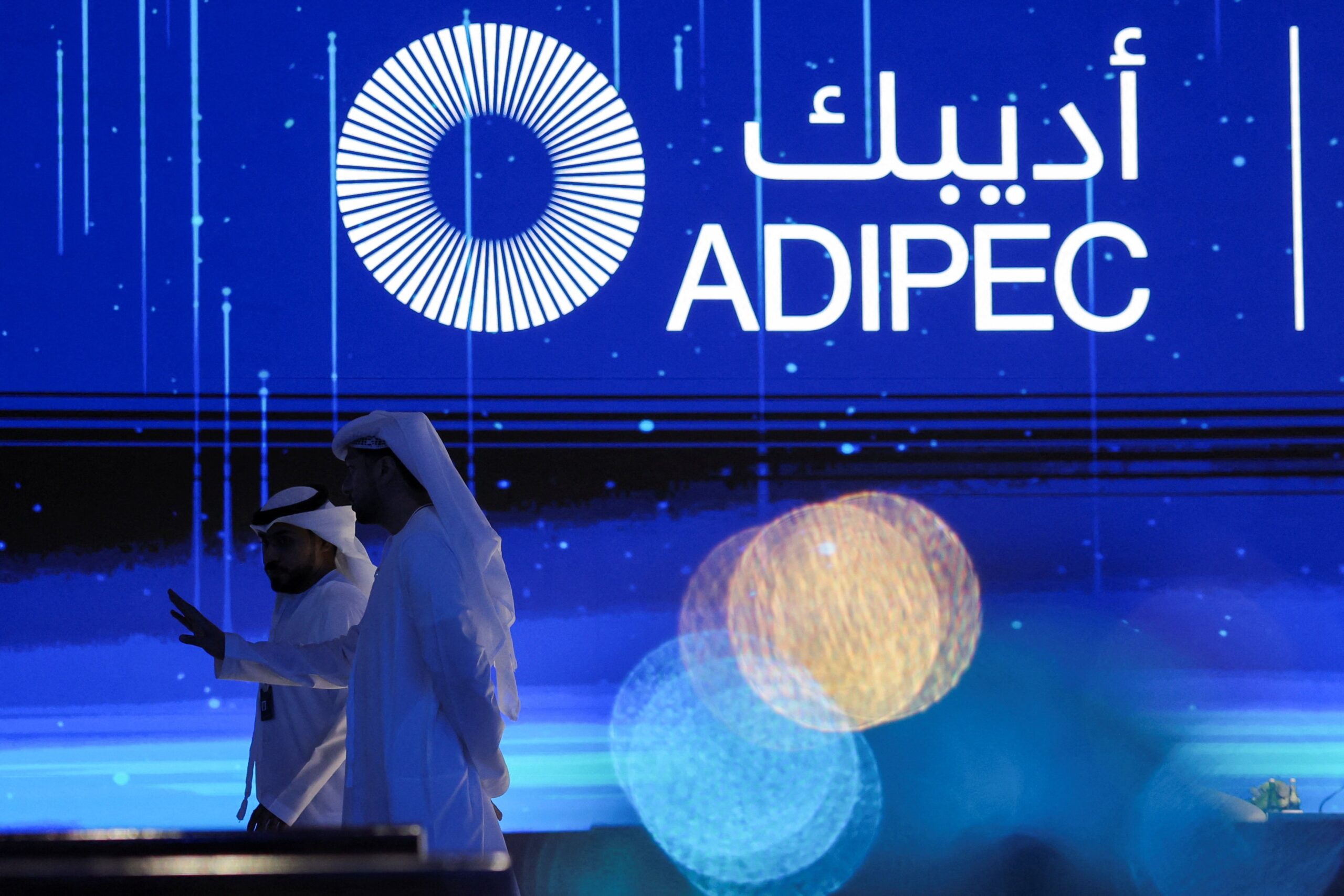
US energy giants ExxonMobil and Chevron have cancelled plans for senior executives to attend a major oil industry event in the United Arab Emirates next week. The decision comes as growing security concerns and rising tensions between the United States and Iran unsettle energy markets.
Two people familiar with the matter said the companies had withdrawn their planned executive visits to the Abu Dhabi International Petroleum Exhibition and Conference, known as ADIPEC.
ExxonMobil Chief Executive Darren Woods had been expected to attend the event. Chevron had planned to send Clay Neff, its upstream president, according to the sources.
The sources said security concerns were behind the cancellations. Neither company provided a public explanation for the decision.
The move comes at a sensitive time for the global oil industry. Fears of possible US military action against Iran, followed by retaliation from Tehran, have increased uncertainty across the Middle East.
Exxon and Chevron Decline to Comment
ExxonMobil and Chevron declined to comment on the reported changes to their travel plans.
The UAE’s state-owned energy company, Abu Dhabi National Oil Company, referred questions to DMG, the organiser of ADIPEC.
DMG said US participation at the event remained strong despite the reported cancellations. The organiser said more than 120 US companies were expected to exhibit, making the United States the second-largest national group after China.
The event is also expected to attract participants from more than 170 countries. DMG said this year’s exhibition was on course to set a new record for participation.
However, a list of confirmed US industry speakers supplied by the organiser did not include ExxonMobil or Chevron.
The absence of the two companies from the speaker list does not explain the reasons for the cancellations. It does, however, highlight the change in plans involving two of the world’s largest oil producers.
ADIPEC is a major meeting point for energy companies, government officials, investors, and technology providers. The event gives industry leaders a chance to discuss oil and gas production, investment, energy security, and changes in global demand.
The planned absence of senior executives from ExxonMobil and Chevron may draw attention because of their importance to the international oil sector.
Security Fears Grow Across the Middle East
The cancellations come amid renewed concern over the risk of military conflict between Washington and Tehran.
Oil markets have faced fresh uncertainty in recent days as traders assess the possibility of new US attacks on Iran and possible Iranian retaliation.
Any military escalation could threaten energy infrastructure and shipping routes across the region. Such risks are closely watched by oil producers, traders, and governments because disruptions can affect supplies and prices.
The Middle East remains central to global energy trade. A serious conflict could create wider problems for oil shipments, raise transport costs, and increase pressure on energy markets.
The United States and Iran have faced years of tension over security, regional influence, and Iran’s nuclear programme. Although diplomatic efforts have continued at different times, the threat of military action remains a major source of uncertainty.
US President Donald Trump said he would not launch an attack on Iran before the November 3 US midterm elections. However, he later said the United States could carry out another military operation against the country.
Those comments have added to uncertainty over Washington’s next steps.
The timing of the statements is important for energy markets. Even without an immediate attack, the possibility of conflict can affect trading decisions, insurance costs, and plans for business travel.
Oil Industry Watches US Policy
For companies such as ExxonMobil and Chevron, security risks in the Middle East can affect both executive travel and wider business operations.
The two companies have major global operations and closely monitor political developments in important energy-producing regions. Any escalation involving Iran could have consequences beyond the countries directly involved.
Market participants are also watching how the situation could affect oil supplies and prices. Iran is a significant regional producer, and the wider Gulf area contains important oil and gas facilities and export routes.
A military confrontation could prompt concerns about the safety of shipping through the Strait of Hormuz, a narrow waterway that handles a large share of global oil trade.
A disruption to this route could affect crude oil deliveries to major importing countries. Even a limited threat to shipping could lead to higher costs and greater price volatility.
Still, the reported cancellations do not establish that an attack is imminent. They show that security concerns are influencing decisions by senior business figures ahead of a major international event.
ADIPEC Remains a Major Energy Gathering
Despite the changes involving ExxonMobil and Chevron, organisers expect ADIPEC to draw companies and delegates from around the world.
The event is a key platform for discussing investment, technology, and the future of the energy industry. It also provides an opportunity for governments and businesses to build commercial ties.
Strong US participation would indicate that American energy companies continue to see value in the event, even as some executives change their travel plans.
The UAE has positioned itself as a major centre for international energy discussions. Abu Dhabi hosts industry meetings that bring together producers, service providers, investors, and policymakers from many countries.
The latest developments could nevertheless place security concerns at the centre of discussions during this year’s conference.
For now, the main question is whether tensions between the United States and Iran will ease or lead to further military action. Any major change could influence oil prices, shipping risks, and business confidence across the region.
The decision by ExxonMobil and Chevron to cancel their executives’ planned trips adds another sign of caution as the energy industry prepares for ADIPEC. With the US election approaching and uncertainty over Iran continuing, oil markets are likely to remain sensitive to political and security developments.

