


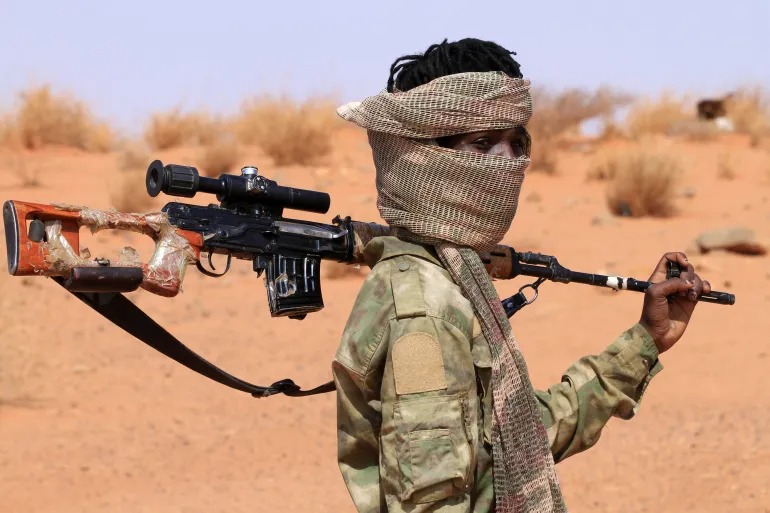
A court in the United Arab Emirates has sentenced eight people to life in prison for arms trafficking and money laundering linked to Sudan’s army. The ruling marks a major legal development as ties between the UAE and Sudan continue to worsen over the ongoing civil war.
The Abu Dhabi Federal Court of Appeal issued the sentences on Thursday, according to the UAE state news agency. The court found that the defendants took part in a network that supplied weapons, ammunition, and military equipment to the Sudanese army.
The accused also used companies and bank accounts in the UAE to move money linked to the arms deals. Investigators said the network relied on forged documents to hide where the funds came from and where they were sent.
The court described the activities as an organised plan involving illegal weapons transfers and financial crimes. It ruled that the deals had put the UAE’s interests at risk.
Eight People Receive Life Sentences
The court found that all eight defendants had played a role in the arms trafficking and money-laundering operation. The case involved the movement of military supplies and funds through a network that crossed national borders.
According to the ruling, the group used business entities and bank accounts in the UAE to handle payments linked to the weapons transactions. Forged records were used to conceal the true source and destination of the money.
Authorities said the network involved several connected activities rather than a single weapons deal. The court concluded that the defendants had taken part in a wider scheme to move military equipment and hide the related financial transactions.
Alongside the life sentences, the court ordered officials to confiscate ammunition and communications devices used in the crimes.
The convicted individuals will also be deported from the UAE after serving their prison terms, state media reported.
The ruling sends a strong message about the legal risks of using UAE-based companies and financial accounts to support illegal arms transfers. It also highlights the role of financial records and business documents in investigating cross-border criminal networks.
However, the published report did not provide the names of the eight convicted individuals or detailed information about the weapons involved.
UAE and Sudan Relations Under Strain
The case comes amid a sharp decline in relations between the UAE and Sudan.
Sudan’s military has accused Abu Dhabi of providing weapons and other support to the Rapid Support Forces, or RSF, a paramilitary group fighting the Sudanese army. The UAE has denied the allegations.
The RSF and Sudan’s army have been at war since April 2023. The conflict began after tensions between the rival forces escalated into open fighting. It has since spread across large parts of the country.
The conflict has also created a serious regional and diplomatic challenge. Allegations of foreign support for either side have added to tensions and raised concerns about the flow of weapons into Sudan.
The latest court ruling concerns people accused of supplying military equipment to Sudan’s army. It does not, by itself, establish the separate allegations made by Sudan’s military against the UAE over support for the RSF.
The distinction is important as the two countries face growing mistrust over the conflict.
Sudan War Creates a Humanitarian Crisis
The war has caused widespread destruction and forced millions of people to leave their homes. More than 14 million people have been displaced, while poverty and food shortages have become severe.
Many families have struggled to find safe shelter, clean water, and enough food. The fighting has also damaged hospitals and other essential services, making it harder for people to receive medical care.
Recent attacks have added to fears about the safety of civilians in the western region of Darfur.
More than 100 people, most of them women and children, were reported killed this week when military drones struck a busy market in Nyala. The city is located in South Darfur and is a key urban centre in the region.
The market was reportedly frequented by RSF fighters. However, the presence of armed personnel in an area does not remove the need to protect civilians under international humanitarian law.
A second attack reportedly struck a civilian neighbourhood in the city.
Medical teams reported a large number of casualties after the strikes. Doctors Without Borders, also known as MSF, said a hospital it supports in Nyala received 36 bodies in the hours following the second attack. Twenty-one of the bodies were wearing civilian clothing.
The organisation also reported that its medical teams treated more than 150 wounded people in the emergency room.
The reports highlight the growing danger faced by civilians as the conflict continues. They also show the pressure on health facilities that must respond to mass casualties while operating in a war zone.
War Crimes Concerns Grow
The United Nations human rights office has previously accused the RSF of committing war crimes and possibly crimes against humanity during its takeover of el-Fasher, the capital of North Darfur state.
The RSF advanced into the city after Sudan’s army withdrew from its last major stronghold in the Darfur region. The takeover prompted international concern over reports of killings and other serious abuses.
Such allegations are part of wider efforts to document possible violations of international law during the conflict. Any formal determination of criminal responsibility depends on evidence and the relevant legal process.
The war has also raised concerns about weapons supplies, financial networks, and outside involvement that could help sustain the fighting.
The UAE court’s ruling adds a new legal development to this wider picture. By sentencing eight people to life imprisonment, the court has punished those it found guilty of illegal arms trafficking and money laundering linked to Sudan’s army.
The case may also draw further attention to how weapons deals are financed and how companies and bank accounts can be used to move money across borders.
For Sudan, the immediate challenge remains the devastating war and its impact on millions of people. For the UAE, the ruling highlights the country’s efforts to prosecute those found guilty of activities that authorities say threaten its interests.
As the conflict continues, allegations of foreign involvement and the flow of military supplies are likely to remain major issues in the region. The humanitarian toll, meanwhile, continues to rise as civilians face displacement, hunger, and deadly attacks.

