


Iran has threatened to disrupt a maritime system that has helped Gulf countries continue exporting energy during the war involving Iran, the United States and Israel. The warning raises fresh concerns about oil supplies, shipping safety and the risk of wider conflict across the Gulf.
Tehran says it will use military and diplomatic pressure to challenge Washington as a US naval blockade of Iran’s southern ports remains in place. Iranian officials have also insisted that the Strait of Hormuz must reopen under terms acceptable to Tehran.
The waterway is one of the world’s most important energy routes. Before the war, roughly one-fifth of global oil and gas supplies passed through the strait. Shipping has been severely disrupted since Iran came under US and Israeli strikes on February 28.
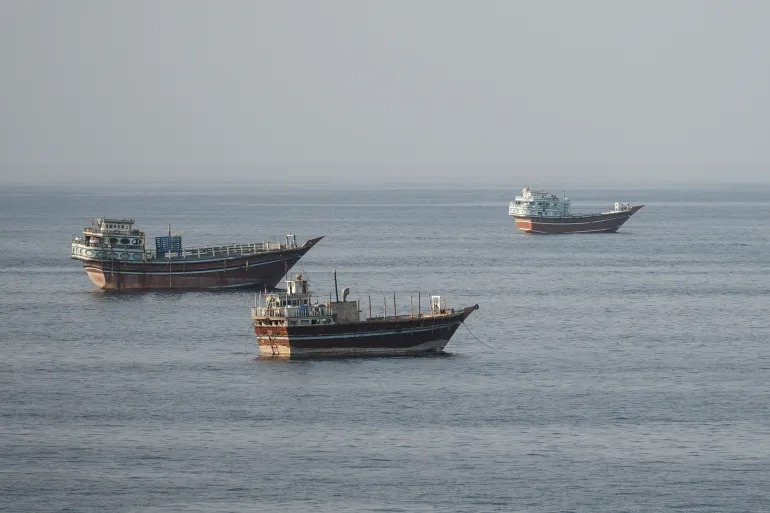
A maritime transfer system has reportedly helped Gulf states move oil and other goods despite the restrictions. The system uses smaller vessels to transfer cargo to larger tankers, allowing some exports to continue during the energy crisis.
Iran’s security chief, Mohsen Rezaei, said on Sunday night that the operation had become a direct target for Tehran. He claimed that US Central Command was working with the United Arab Emirates military to move oil through the system.
Rezaei alleged that Iran had been striking five or six vessels involved in the transfers each night for weeks. The claims could not be independently confirmed from the information available.
“You are smuggling, but the strait is under Iran’s control, and we manage it,” Rezaei said.
His remarks appeared to challenge US President Donald Trump, who has pointed to periods when energy exports from the Gulf have returned to levels seen before the war.
Rezaei’s comments also suggested that Tehran wants to maintain long-term control over shipping through the Strait of Hormuz. He warned that Iran would respond harshly if its energy facilities or civilian infrastructure came under further attack.
The warning extended beyond ships and oil facilities. Rezaei threatened US-linked undersea cables, data centres and artificial intelligence facilities in the UAE and around the strait.
Such sites have become increasingly important to the region’s economy. Data centres support digital services and AI systems, while undersea cables carry large volumes of international internet traffic. Any attack could disrupt communications and business operations across several countries.
The threats also put pressure on Arab states that maintain security ties with Washington. Rezaei accused Saudi Arabia of helping the United States move oil around Iran’s restrictions. However, he did not issue a direct threat to attack Riyadh.
Saudi Arabia has faced separate attacks from Yemen’s Houthi movement, which is aligned with Tehran. The wider regional conflict has increased concerns that attacks could spread across borders and threaten key infrastructure.
In early September, Iran’s Islamic Revolutionary Guard Corps warned tankers at ports and anchorages in Kuwait and Bahrain. The force cited US attacks on Iranian tankers and accused both Gulf countries of helping Washington by hosting American troops.
The latest warnings come as Iran and the United States remain far apart over the conditions needed to end the conflict and restore normal shipping through Hormuz.
Tehran has said the United States accepted some of its seven conditions for reopening the strait and ending the war. However, Iranian officials insist that a final agreement will depend on Washington meeting all of their demands.
The United States has not confirmed that it has accepted the full set of conditions. The dispute over shipping access remains a major obstacle to a wider settlement.
Hamidreza Azizi, a senior Iran analyst at the Crisis Group, said Tehran appeared to believe it was not under immediate pressure to reach an agreement. In his assessment, restrictions on Hormuz give Iran a way to affect the global economy and increase pressure on its opponents.
Azizi also questioned whether Iran could maintain that pressure for a long period. He warned that the economic costs of the conflict were growing for Iran itself.
The standoff creates risks for both regional economies and global energy markets. Continued disruption could raise shipping costs, delay deliveries and add to uncertainty for oil and gas buyers.
It could also make diplomatic efforts harder if threats against vessels and digital infrastructure lead to further retaliation. Gulf states must balance their economic need for open shipping routes with the security risks linked to the conflict.
For now, Iran’s warning signals that Tehran intends to keep using control over the Strait of Hormuz as leverage. Whether that strategy forces new negotiations or leads to further attacks will depend on the actions of Iran, the United States and regional governments in the coming weeks.

