


The United Arab Emirates is expanding its role in the global space sector through a strategy that focuses on building national capability while working with a wide range of international partners. Recent developments show that the country is choosing cooperation based on practical goals rather than aligning itself with a single global space power.
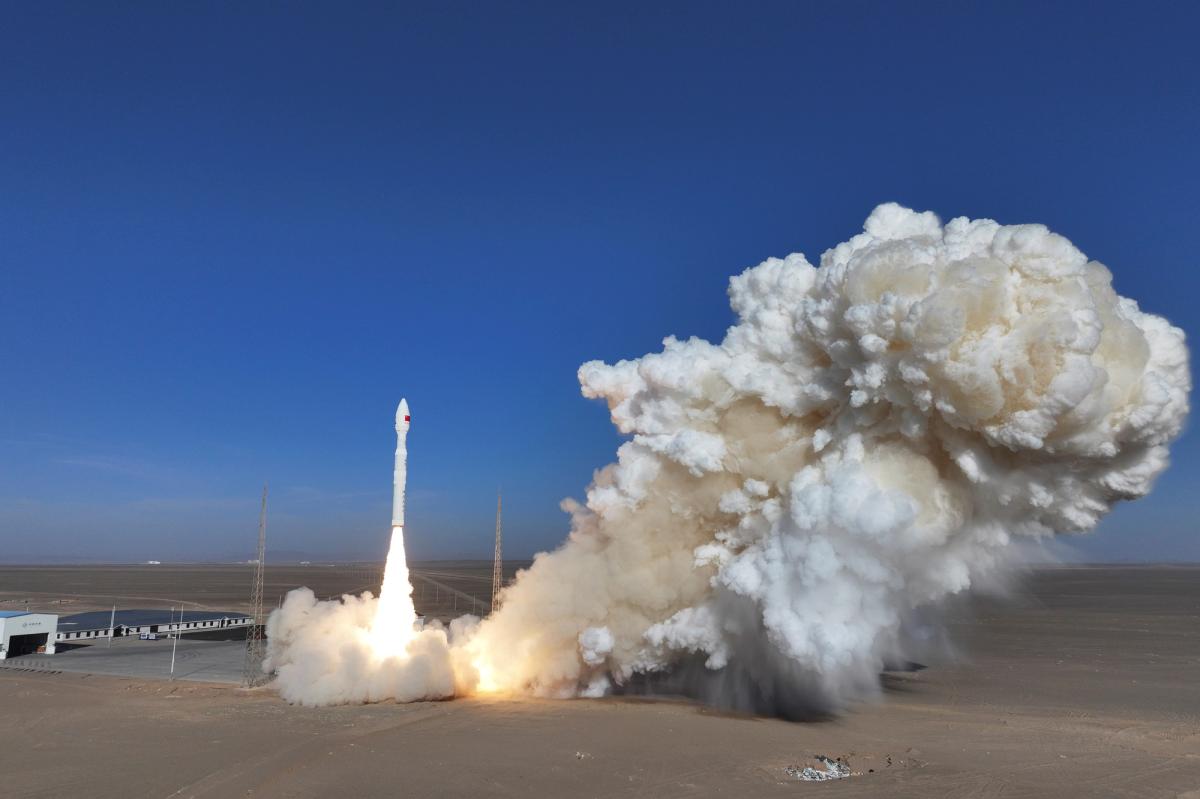
A clear example came on August 17 when the UAE launched the SEO Earth observation satellite from China’s Taiyuan Satellite Launch Centre. The mission received limited international attention, but it highlighted the country’s growing approach to space development.
The SEO satellite was developed by the National Space Science and Technology Centre at United Arab Emirates University in cooperation with Chinese partners. The satellite was launched aboard a Long March 2C rocket.
Officials said the satellite will support environmental protection, resource management, urban planning and sustainable development. The project also gave Emirati engineers, researchers and students valuable experience in satellite design, testing and operations.
The launch reflects a broader effort by the UAE to strengthen local expertise. The country has made skill development a major part of its long-term space plans. By taking part in projects from development through operation, local teams gain experience that can support future missions.
At the same time, the UAE continues to maintain strong space ties with the United States. The country was among the first nations to sign the Artemis Accords in 2020. The agreement supports international cooperation in future lunar exploration efforts.
The UAE also plays an important role in the Artemis program. The Mohammed Bin Rashid Space Centre is contributing the Crew and Science Airlock for Gateway, a planned space station that will orbit the Moon.
The airlock will allow astronauts to conduct spacewalks and move equipment between the station and outer space. It is considered a key part of the future lunar infrastructure being developed through international cooperation.
NASA has also committed to sending an Emirati astronaut to Gateway during a future mission. This step further strengthens the country’s involvement in advanced human spaceflight programs.
The UAE has not limited its cooperation to one region or one group of partners. Instead, it has worked with countries and organizations across the world to support its national goals.
This strategy focuses on what each partnership can contribute. Rather than choosing between major powers, the UAE is selecting projects that help create a stronger domestic space sector.
Government leaders have openly stated that developing local capability remains a top priority. In May, the country announced a major International Space Cooperation Program valued at AED1 billion.
The initiative aims to increase research and development partnerships with foreign institutions and companies. It also seeks to encourage technology transfer, support innovation and create new opportunities for Emirati professionals.
Officials said the program is designed to build local knowledge, strengthen technical skills and help transform research into commercial industries that can support economic growth.
Viewed through this lens, the SEO satellite project becomes part of a larger national plan. The mission is not only about satellite operations. It is also about developing people, institutions and long-term expertise.
The UAE has not released extensive technical details about the satellite. Public information has instead focused on sustainability goals and educational benefits. This emphasis highlights the country’s interest in practical outcomes and capacity building.
The same approach can be seen in other projects. Emirati organizations cooperate with partners in Europe, Asia and North America. The country’s space sector regularly works with institutions from different regions to support scientific and technological progress.
One of the best examples remains the Hope mission to Mars. That mission combined Emirati leadership with support from international academic and technical partners. The project successfully reached Mars and became a major milestone for the nation’s space ambitions.
Experts note that modern space exploration requires cooperation. Very few countries can independently manage every stage of satellite development, launch services, human spaceflight and planetary exploration.
As a result, partnerships have become an important part of the global space industry. The key challenge is ensuring that cooperation leads to lasting national growth rather than dependence.
The UAE’s ambitions are significant. The country is investing in Earth observation, astronaut missions, planetary science and future exploration projects. Among its long-term goals is an ambitious mission to the asteroid belt.
These projects require broad international cooperation. Yet the UAE continues to place national capability at the center of its strategy. By working with different partners while developing local talent and infrastructure, the country aims to build a sustainable and competitive space sector for the future.

